
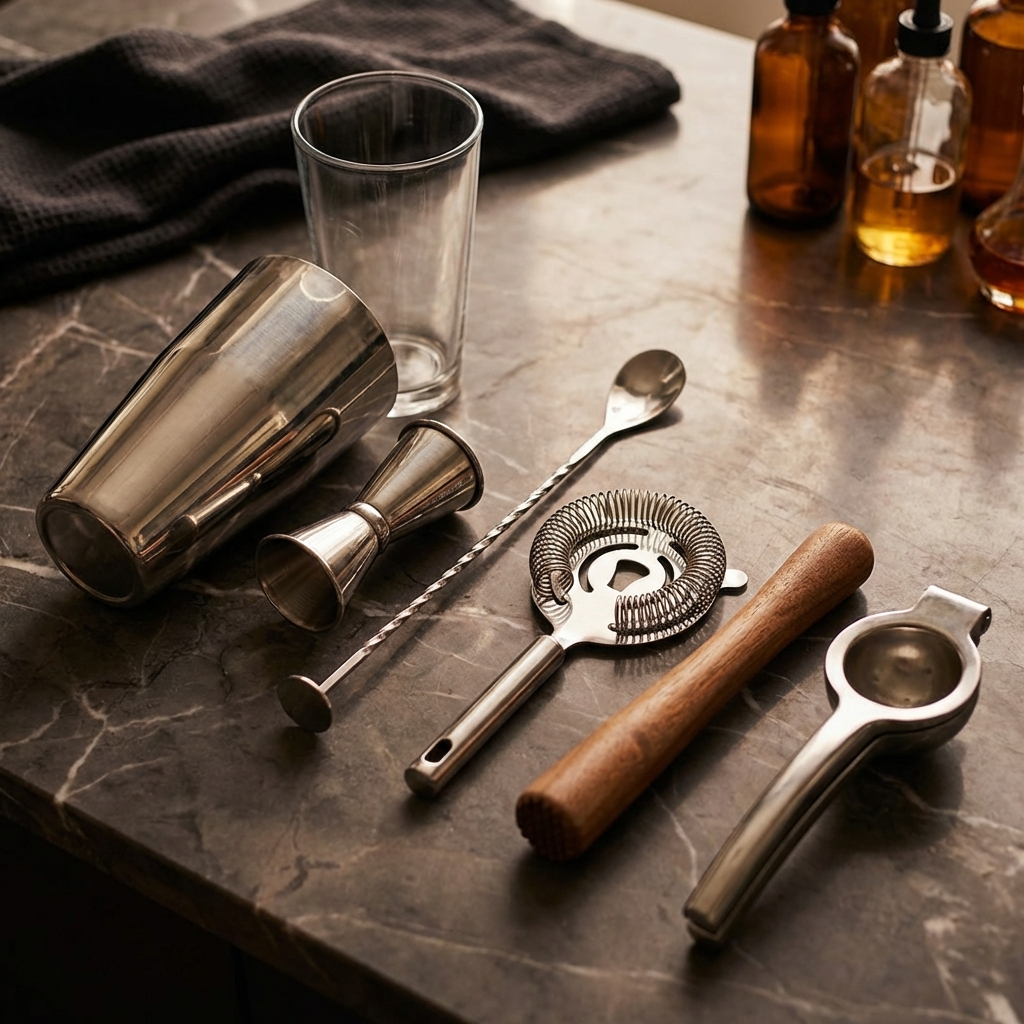
Building a home bar can feel overwhelming. There's an endless list of tools, bottles, and obscure ingredients that seemingly every cocktail demands. But the truth is, you don't need a commercial bar setup to make excellent drinks at home.
What matters more than quantity is versatility. The right selection of tools and ingredients will let you make dozens of classic and contemporary cocktails without cluttering your kitchen or draining your budget.
This guide covers what you actually need: the tools that get used every session, the spirits that form the foundation of most cocktails, and the mixers and modifiers that transform a simple pour into something special. Start with the essentials, and expand thoughtfully from there.
Essential Cocktail Tools
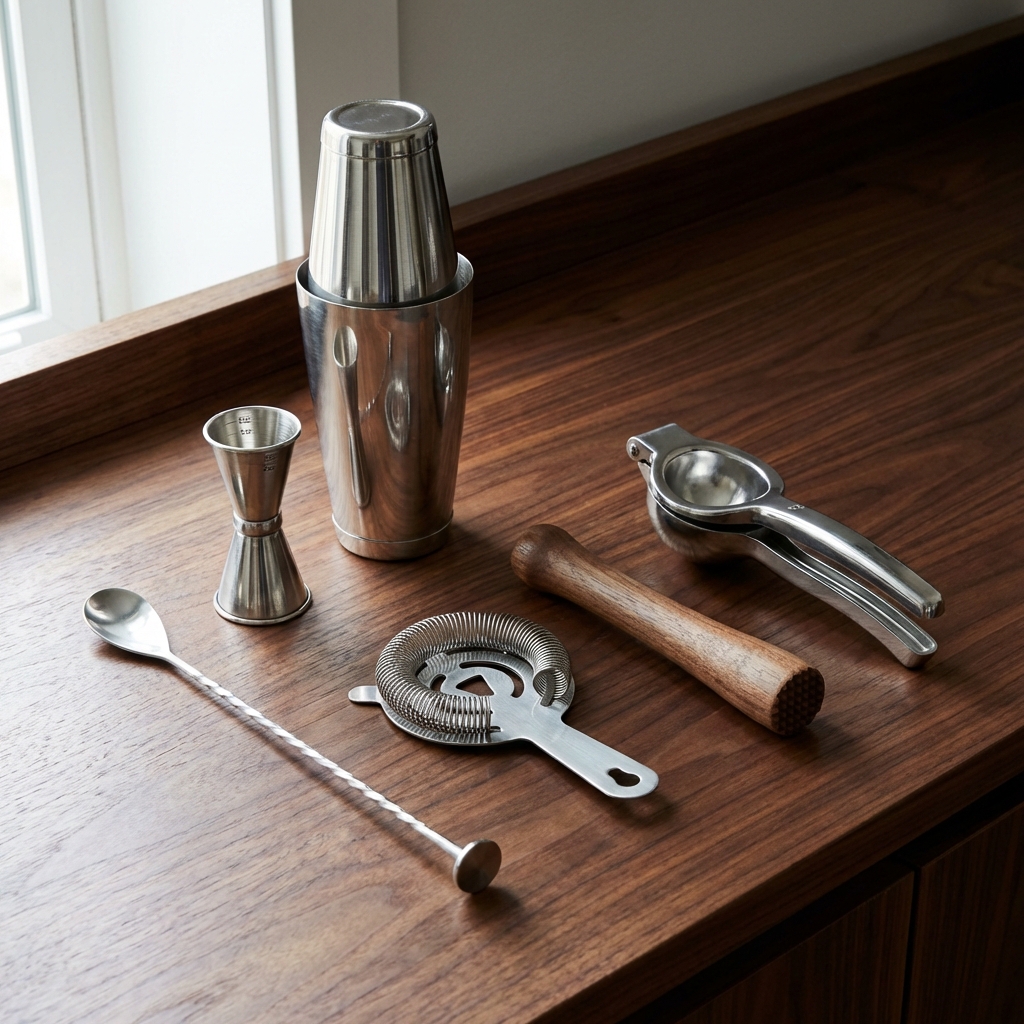
Good tools make cocktail-making easier and more consistent. You don't need gadgets for every technique, just a few well-made essentials that cover the fundamentals.
Shaker
A cocktail shaker is non-negotiable. There are two main types: the Boston shaker, consisting of two cups that fit together, and the Cobbler shaker, a three-piece design with a built-in strainer. For beginners, the Cobbler is more intuitive. For versatility and durability, many bartenders prefer the Boston.
If you're choosing one, a two-piece Boston shaker in stainless steel is a solid investment. It's easier to clean, less prone to jamming, and works with any strainer.
Jigger
Accurate measuring is the difference between a balanced drink and a forgettable one. A jigger, typically with a larger measure on one side and a smaller one on the other, ensures consistent results every time. Look for one with clear internal markings so you can measure partial quantities.
Bar Spoon
Long-handled and twisted, a bar spoon lets you stir cocktails gently without over-diluting them. It's essential for any drink that's stirred rather than shaken, like a Martini or Old Fashioned. The twisted handle also helps layer drinks when needed.
Strainer
A Hawthorne strainer fits snugly over your shaker tin and holds back ice while you pour. For extra smoothness, particularly with citrus cocktails, a fine-mesh strainer removes small ice shards and pulp. One Hawthorne is essential; a fine strainer is a worthwhile addition.
Muddler
Used to gently press herbs, fruit, and sugar together, a muddler releases essential oils and juices without tearing ingredients to shreds. Wood or food-grade plastic works equally well. It's indispensable for Mojitos, Caipirinhas, and similar drinks.
Citrus Press
Fresh juice transforms cocktails. A handheld citrus press, often called a Mexican elbow, extracts juice quickly and keeps seeds out of your drink. Wooden reamers work too, but a press is faster and less messy.
Optional Extras
Once you have the basics, there are a few tools worth adding over time: a mixing glass for stirred drinks, a channel knife or peeler for garnishes, and silicone ice moulds for larger, slower-melting cubes. None are essential on day one, but each adds polish to your setup.
Core Spirits for a Versatile Home Bar
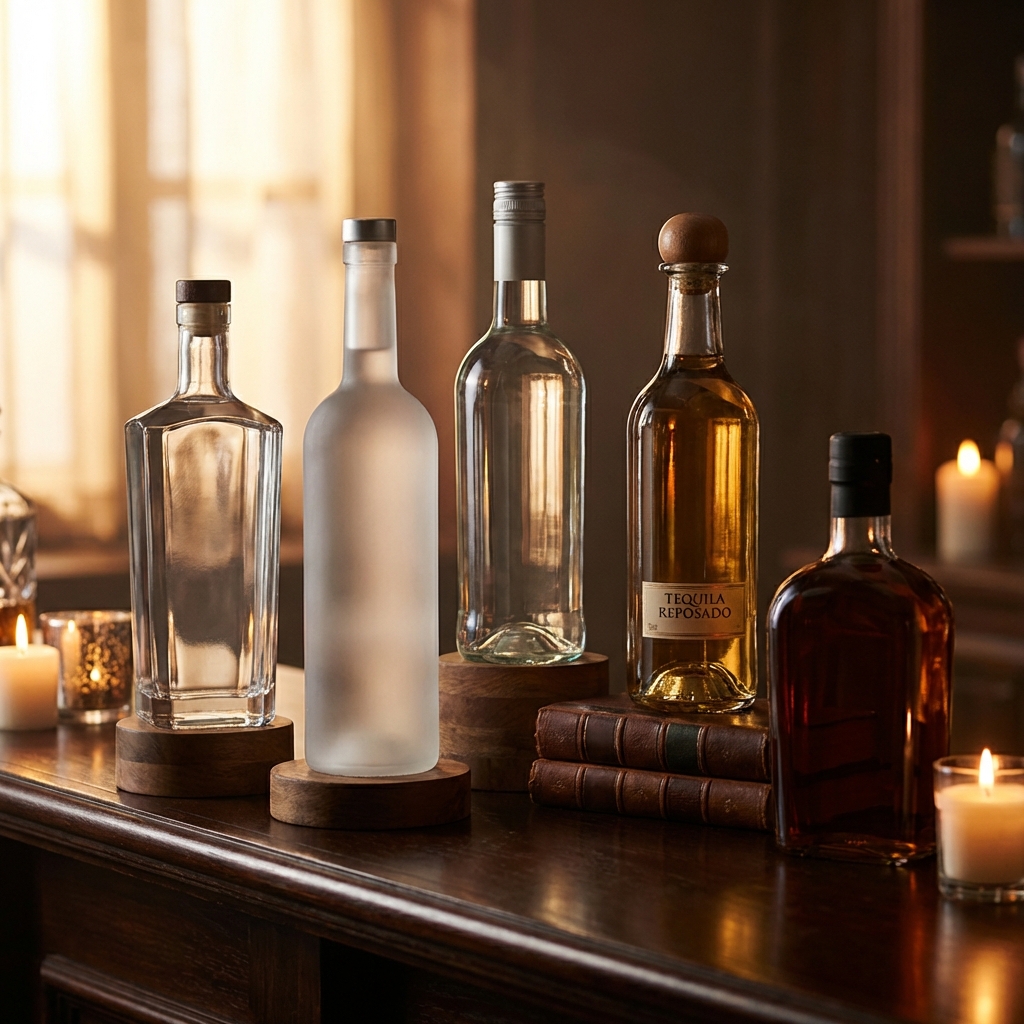
You don't need a wall of bottles to make great cocktails. With five carefully chosen spirits, you can cover the vast majority of classic recipes. The key is selecting bottles that work across multiple drinks rather than buying for a single recipe.
Gin
A versatile London Dry gin is an excellent starting point. Juniper-forward with citrus and spice notes, it works beautifully in Gin & Tonics, Martinis, Negronis, and countless other cocktails. More contemporary gins with floral or citrus profiles are worth exploring later, but a classic London Dry gives you the most range.
Vodka
Vodka neutrality makes it incredibly versatile. It's the base for Espresso Martinis, Moscow Mules, Cosmopolitans, and simple mixed drinks. A smooth, mid-range bottle is all you need; ultra-premium options rarely justify the extra cost in cocktails.
Rum
For maximum flexibility, a quality white rum comes first. It's essential for Mojitos, Daiquiris, Piña Coladas, and most tropical cocktails. When you're ready to expand, a golden or aged rum adds depth to sipping drinks and richer cocktails like Dark 'n' Stormys.
Tequila
A 100% agave blanco tequila is clean, versatile, and perfect for Margaritas and Palomas. A reposado, with its subtle oak influence, works well in more complex cocktails and is smooth enough to sip. Pick one style to start and add the other when your budget allows.
Whisky
Whisky offers enormous variety, but for cocktails, a mid-range bourbon is a practical first choice. Its sweetness and vanilla notes work brilliantly in Old Fashioneds, Whiskey Sours, and Manhattans. If you prefer Scotch, a blended whisky without heavy peat is more versatile in mixed drinks.
Liqueurs & Modifiers Worth Owning

Modifiers are where cocktails gain complexity. A few well-chosen bottles dramatically expand what you can make, turning simple spirit-and-mixer drinks into balanced, layered creations.
Orange Liqueur
Triple sec or curaçao appears in countless cocktails, from Margaritas to Sidecars to Cosmopolitans. A quality orange liqueur adds sweetness, citrus brightness, and body. Mid-range options work well; premium versions like Cointreau or Grand Marnier are worth considering as your palate develops.
Vermouth
Vermouth is essential for classic cocktails. Dry vermouth goes into Martinis, while sweet vermouth stars in Manhattans and Negronis. Buy both, starting with smaller bottles if possible, as vermouth oxidises once opened. Store it in the fridge and replace it every couple of months for best results.
Bitters
Bitters are cocktails' secret weapon. Angostura bitters, with their warm spice and herbal notes, are indispensable for Old Fashioneds, Manhattans, and many classics. Orange bitters add citrus complexity to Martinis and spirit-forward drinks. A few dashes transform a drink.
Mixers, Juices & Fresh Ingredients
The best spirits in the world can't save a cocktail made with stale mixers or bottled lime juice. Fresh, quality ingredients make an enormous difference.
Citrus Juices
Fresh lemon and lime juice are non-negotiable for serious cocktails. Pre-bottled juices have a flat, cooked flavour that undermines even well-made drinks. Squeeze fresh for each session, lime especially lasts only a few hours before it loses brightness.
Carbonated Mixers
Keep soda water, tonic, ginger beer, and cola on hand. Soda water is endlessly versatile. A quality tonic, without excessive sweetness, elevates Gin & Tonics. Ginger beer adds spice to Mules and Dark 'n' Stormys. Buy in small bottles or cans to ensure freshness.
Sugar Syrup
Simple syrup, equal parts sugar and water heated until dissolved, is used in countless recipes. It dissolves instantly into cold drinks, unlike granulated sugar. Make it fresh and store it in the fridge for a couple of weeks. For variety, try honey syrup or demerara syrup.
Garnishes
Lemons, limes, and oranges do double duty: juice for the drink, peel for the garnish. Fresh mint is essential for Mojitos and Juleps. Cocktail cherries, olives, and aromatic herbs like rosemary or basil add finishing touches that make home cocktails feel special.
Ice: The Overlooked Ingredient
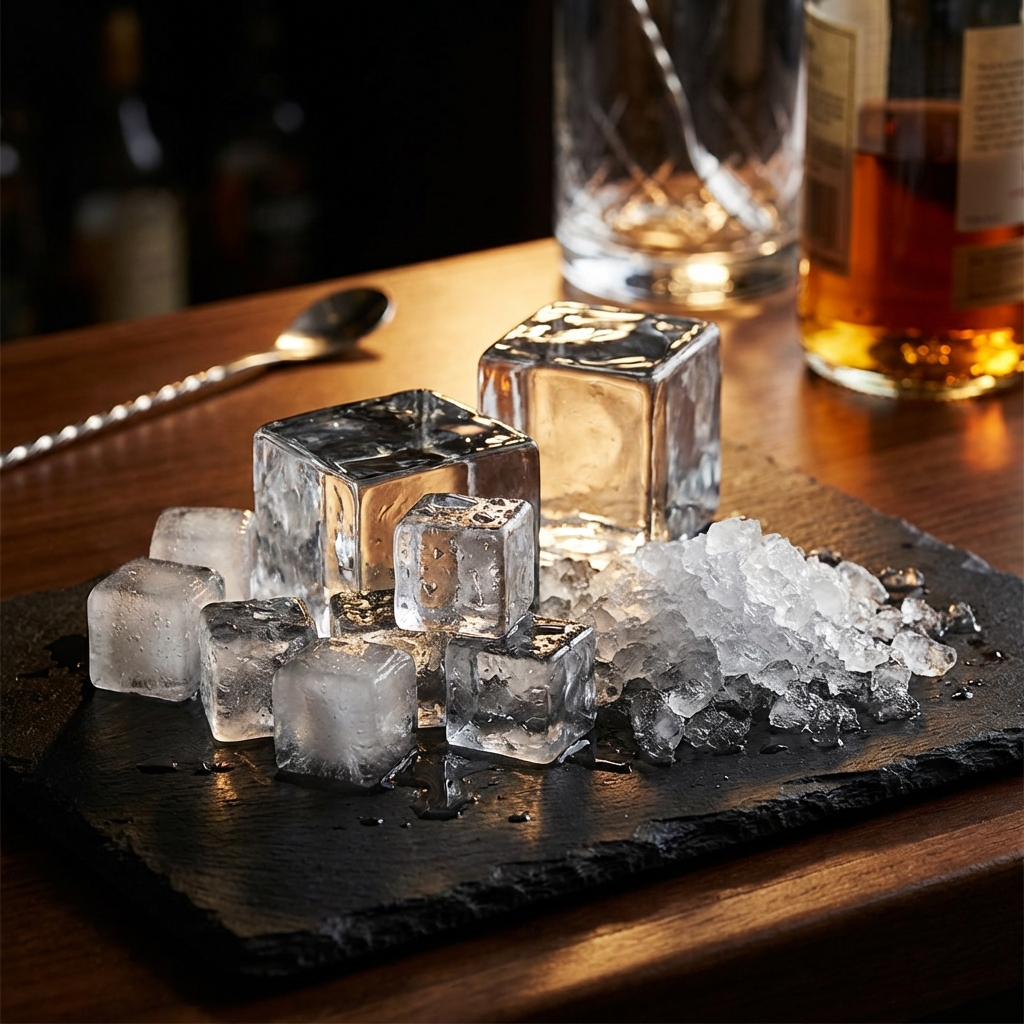
Ice is an ingredient, not an afterthought. It chills, dilutes, and affects the texture of every cocktail. The type of ice you use matters more than most people realise.
Size Matters
Larger ice cubes melt more slowly, keeping drinks cold without over-diluting them. For stirred drinks served on the rocks, a single large cube is ideal. For shaking, smaller cubes work better, chilling the drink rapidly. Crushed ice suits tiki drinks and Juleps, where faster dilution is desirable.
Clarity
Clear ice isn't just about looks. The impurities that cause cloudiness can affect flavour. You can make clearer ice at home by using boiled water, insulating a cooler to freeze directionally, or simply buying moulds designed for the purpose. It's an optional refinement, but one that elevates presentation.
Practical Tips
Freeze more ice than you think you need. Use fresh ice for each drink rather than re-using what melted in your shaker. Silicone moulds produce larger cubes without cracking, and dedicated ice cube trays beat the ones that came with your freezer.
Building Your Bar Over Time
You don't need to buy everything at once. The joy of building a home bar is that it evolves with your tastes. Start with one or two base spirits and the essential tools, then expand as you discover what you enjoy.
Avoid buying bottles for a single recipe unless it's a drink you'll make often. Before purchasing something niche, ask yourself: what else can I make with this? If the answer is very little, wait until your bar has the essentials covered.
Use the Drinks Finder to discover cocktails you can make with what you already own. It's a practical way to explore new recipes without constantly adding bottles.
Working the other way round? Shop the Cocktail takes a classic and hands you the shopping list, one bottle from our catalogue for each spirit, with a buy link.
As a starting point, consider this order of priority: tools first, then a core spirit you love, followed by vermouth and bitters if you enjoy spirit-forward drinks, or citrus and syrup if sour cocktails appeal to you. From there, add spirits and modifiers based on the cocktails you find yourself wanting to make.
The goal isn't to have the most bottles. It's to have the right ones for how you like to drink.