Gin begins life as a neutral spirit, closer to vodka than whisky or rum. What transforms it into gin is flavour, introduced through botanicals.
Every gin must taste predominantly of juniper, but beyond that, producers have enormous creative freedom. Herbs, spices, roots, fruits, and flowers all play a role.
While gin styles vary widely, the production process follows a few core steps. Understanding them helps explain why gins can taste so different from one another.
Ingredients
Gin is built from three essential elements: neutral spirit, botanicals, and water. Unlike whisky or rum, ageing plays little to no role in most gin.
The neutral spirit is typically made from grain such as wheat, barley, or corn. It is distilled to a very high strength to remove flavour, aroma, and impurities.
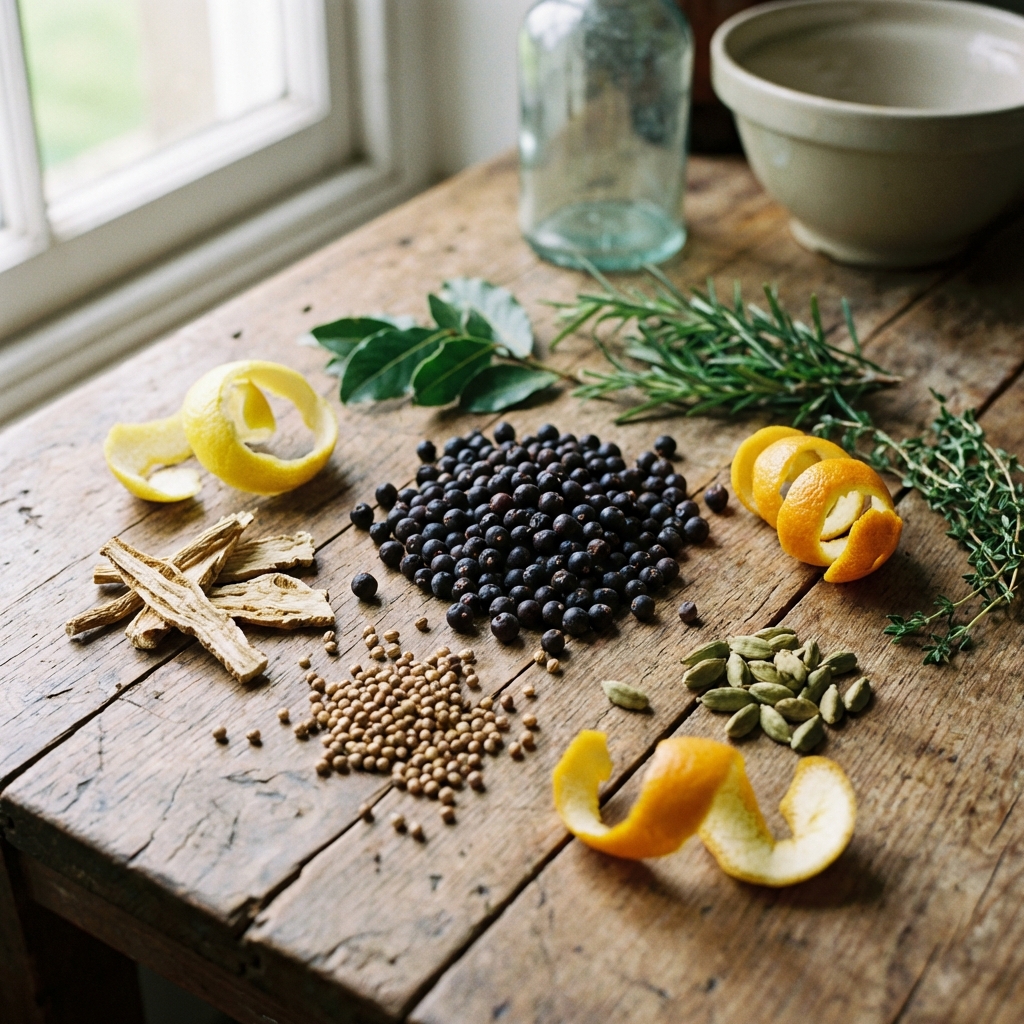
Juniper berries are mandatory and must be the dominant flavour. Beyond juniper, producers choose their own botanical recipes, which may include coriander seed, citrus peel, angelica root, liquorice, cardamom, or dozens of other ingredients.
Water is used to dilute the finished spirit to bottling strength. Its quality and mineral content can subtly influence the final texture and mouthfeel.
Neutral Spirit
Before botanicals come into play, gin starts as a neutral alcohol. This base spirit is distilled to around 96 percent alcohol, leaving it almost flavourless.
Many gin producers buy neutral spirit from large distilleries rather than making it themselves. This allows them to focus entirely on botanical selection and distillation technique.
Whether produced in-house or sourced externally, the neutrality of the base spirit is essential. It provides a clean canvas for botanical flavours.
Botanical Distillation
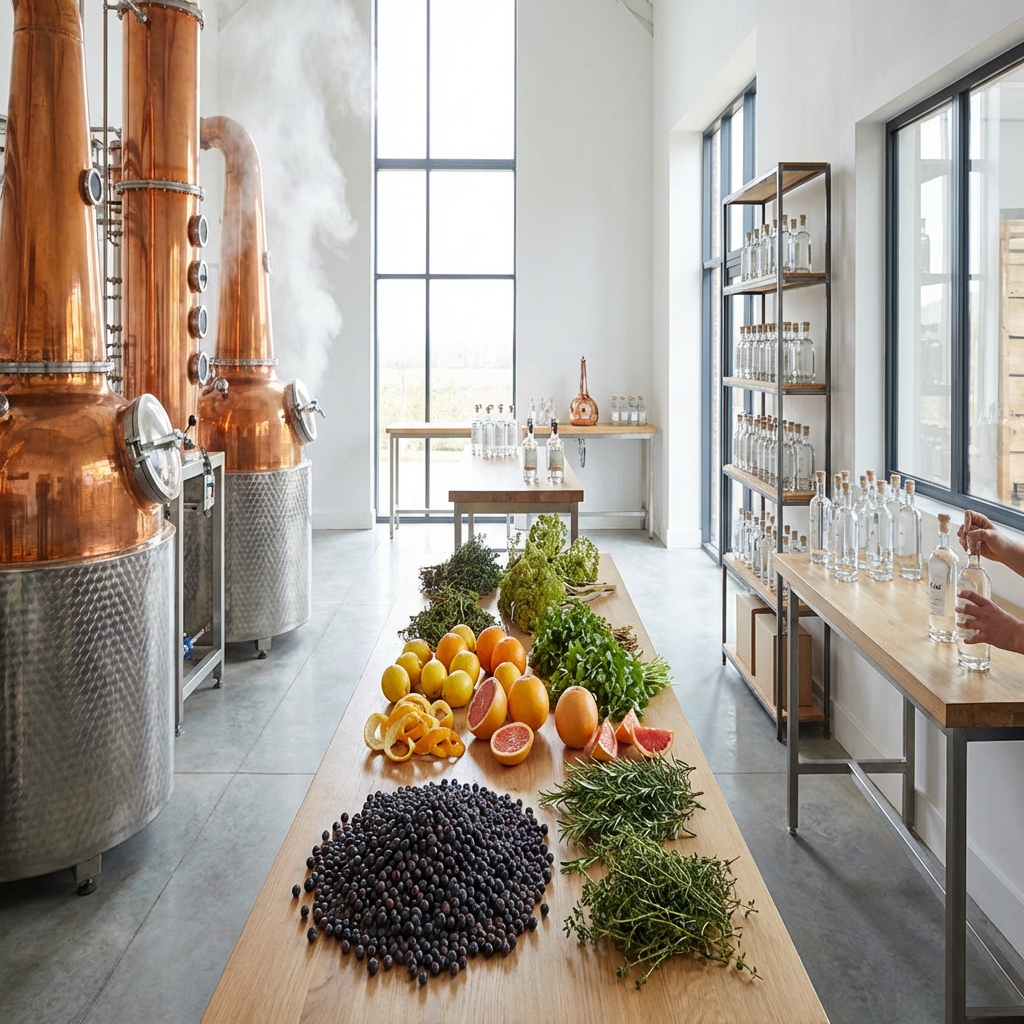
Gin gets its flavour during a second distillation, when botanicals are introduced to the neutral spirit. There are several methods, each producing different results.
In steeping, botanicals are soaked directly in the spirit before distillation, creating rich and intense flavours. In vapour infusion, alcohol vapour passes through a basket of botanicals, extracting lighter, more delicate aromas.
Some producers combine both methods. The choice affects balance, intensity, and how individual botanicals express themselves in the final gin.
As with other spirits, the distiller discards early and late portions of the distillate, keeping only the heart for bottling.
Dilution and Bottling
After distillation, the gin is diluted with water to reach its final bottling strength. Most gins are bottled between 40 and 47 percent ABV.
Many gins are rested for a short period before bottling. This allows flavours to integrate and harsh edges to soften.
Unlike whisky or rum, gin is rarely aged. Oak would overwhelm the delicate botanical balance that defines the spirit.
Once rested and diluted, gin is filtered and bottled. Some producers choose minimal filtration to preserve flavour, while others filter more heavily for clarity. No colouring or sweetening is required for gin, though some styles allow small adjustments.
Why Production Matters
Gin's character comes almost entirely from production choices. Botanical selection, ratios, and distillation method shape every bottle.
Understanding how gin is made helps explain why styles range from classic and juniper-forward to modern and citrus-led.
Once you understand the process, tasting gin becomes an exercise in recognising those choices and finding the styles that suit your palate.