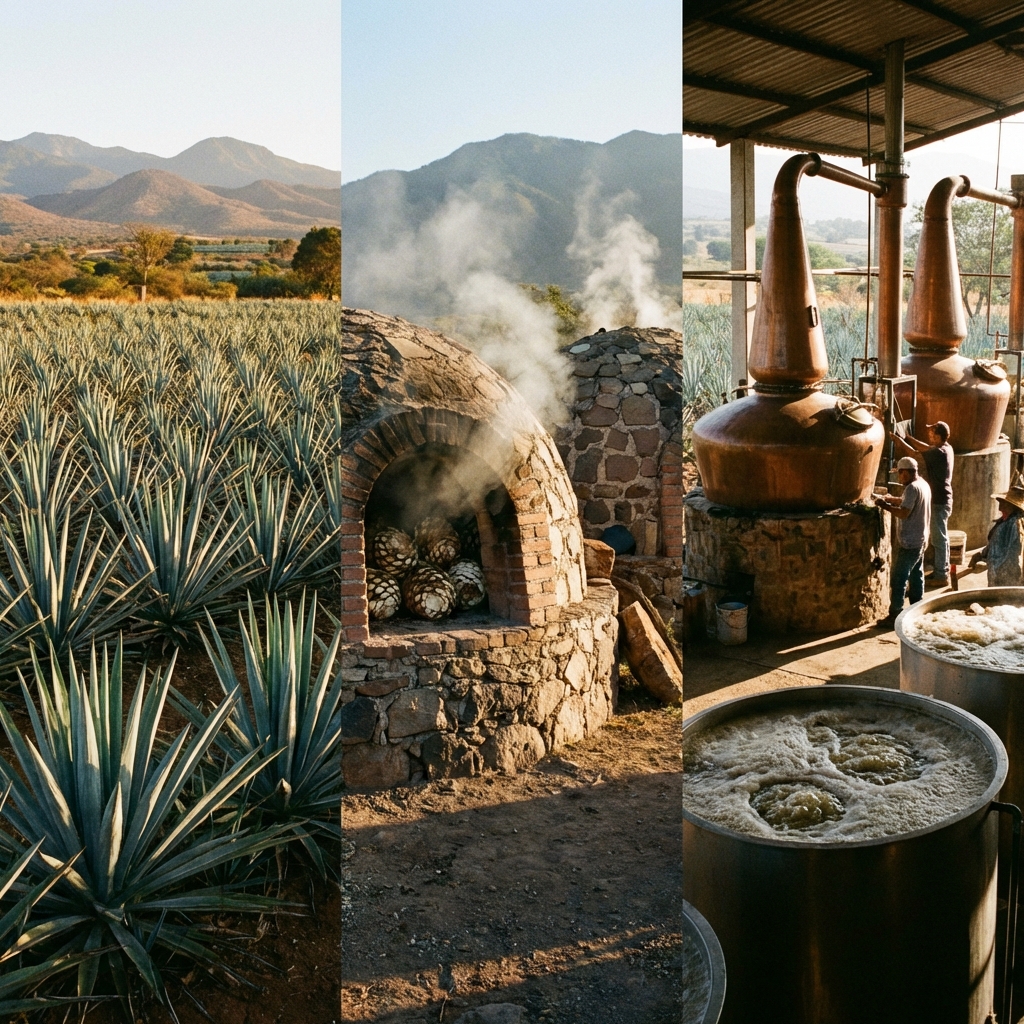
Tequila is made from a single plant: blue agave. Unlike whisky, rum, or gin, tequila is not defined by grain or sugarcane, but by the region and raw material from which it comes.
Every bottle of tequila reflects years of agricultural work before distillation even begins. From planting to harvest, blue agave takes time, patience, and careful handling.
While styles vary, the core production process follows a clear path. Understanding it helps explain why tequilas can taste so different from one another.
Ingredients
Tequila is made from just a few essential elements: blue agave, water, yeast, and time. Regulations tightly define what can and cannot be called tequila.
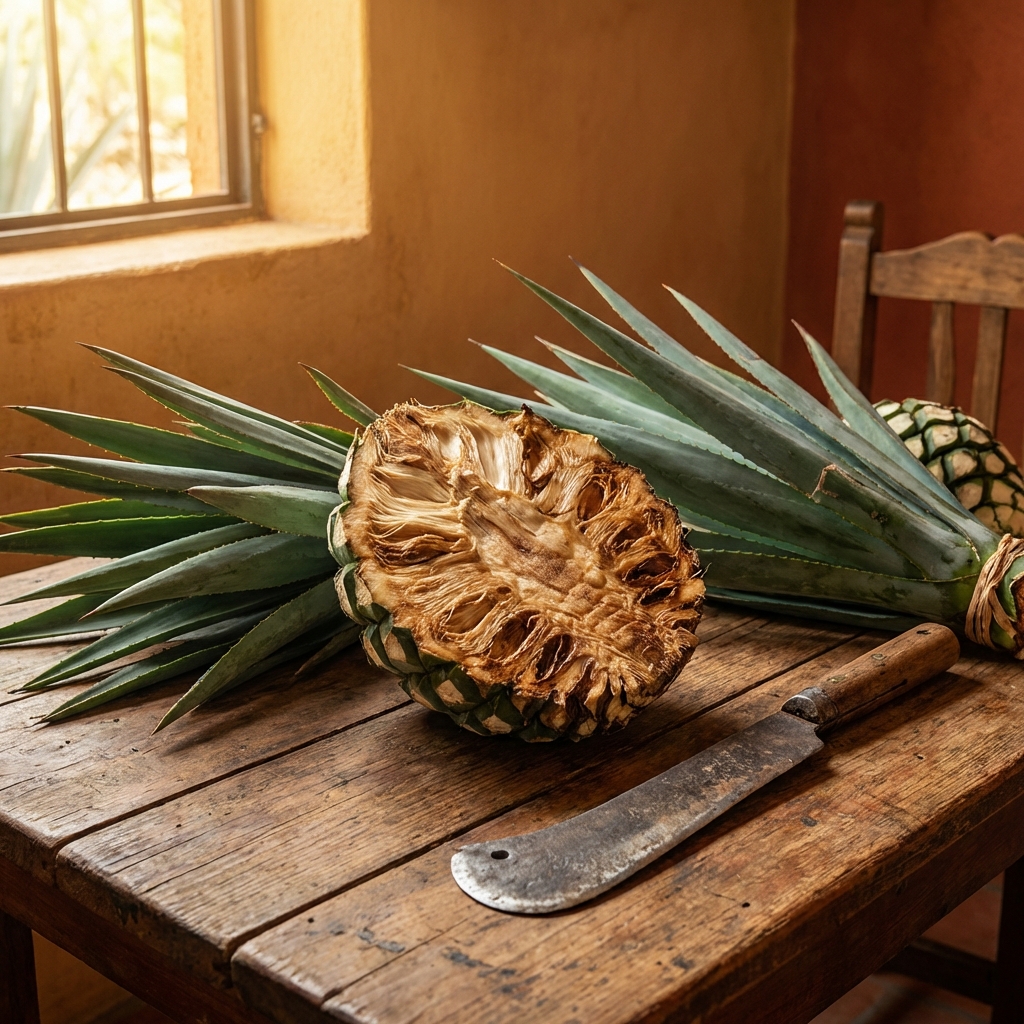
By law, tequila must be made from blue Weber agave grown in specific regions of Mexico. The heart of the plant, called the piña, is harvested once the agave reaches maturity, typically after six to eight years.
Some tequilas are made using only agave sugars, while others include additional sugars during fermentation. These choices influence flavour, texture, and overall character.
Cooking
Once harvested, agave piñas must be cooked to convert complex carbohydrates into fermentable sugars. This step is essential to tequila production.
Traditional producers use brick ovens to slowly roast the agave over many hours. This method develops rich, sweet flavours and softens bitterness.
Modern distilleries may use autoclaves or diffusers, which speed up production. Each approach affects flavour and efficiency differently.
Extraction
After cooking, the softened agave is crushed to extract its sugary juice. This liquid forms the base of fermentation.
Some producers use a traditional stone wheel called a tahona, which gently crushes the agave. Others rely on modern mechanical shredders. The method of extraction influences texture and flavour.
Fermentation
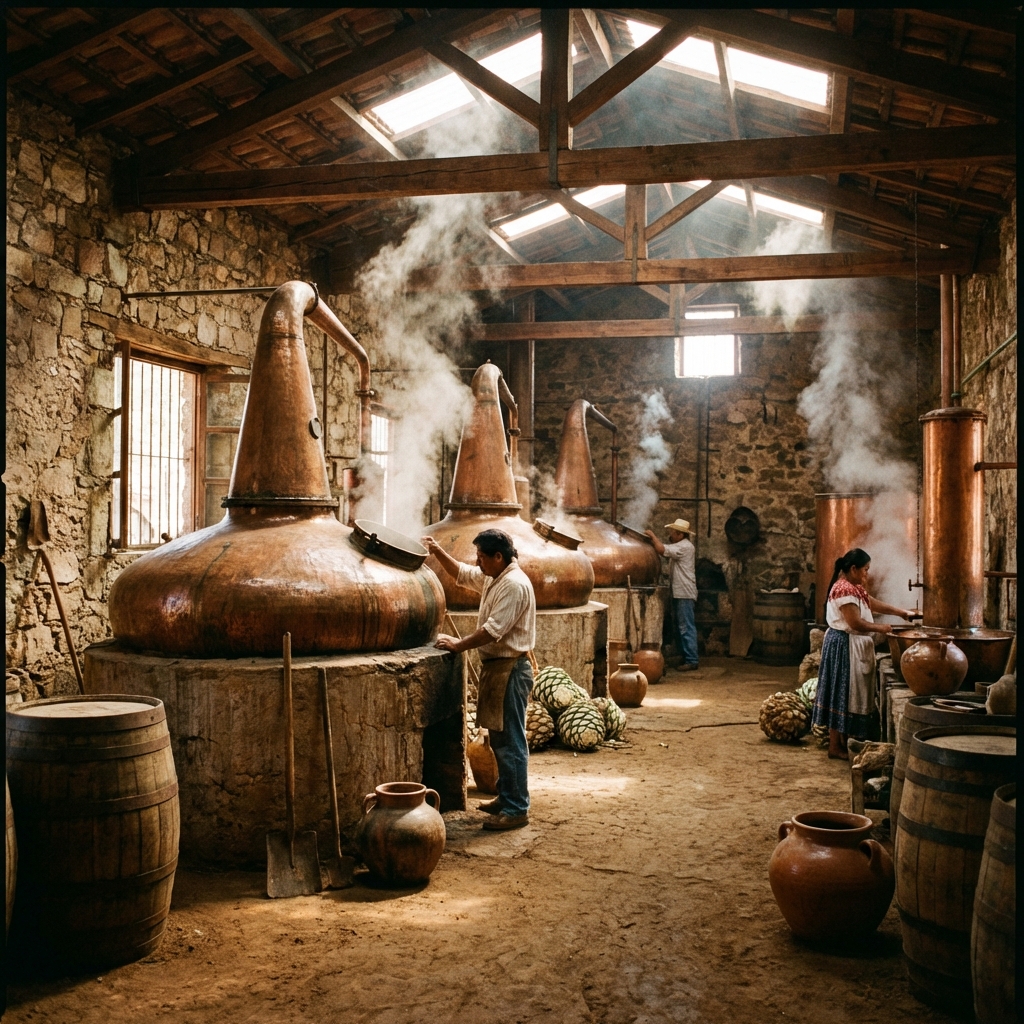
The extracted agave juice is transferred to fermentation tanks, where yeast converts sugars into alcohol. Fermentation can last several days.
Fermentation plays a major role in flavour development. Yeast produces fruity, spicy, and earthy compounds that carry through distillation.
By the end of fermentation, the liquid resembles a rustic beer and is ready for distillation.
Distillation
Distillation concentrates the alcohol and refines flavour. Tequila is typically distilled twice, though some producers distil more or fewer times.
Copper pot stills are common and help remove unwanted sulphur compounds. The distiller selects the heart of the run for maturation or bottling.
Maturation
Some tequilas are bottled immediately after distillation as blanco or silver, while others are aged in oak. Ageing softens the spirit and adds new layers of flavour.
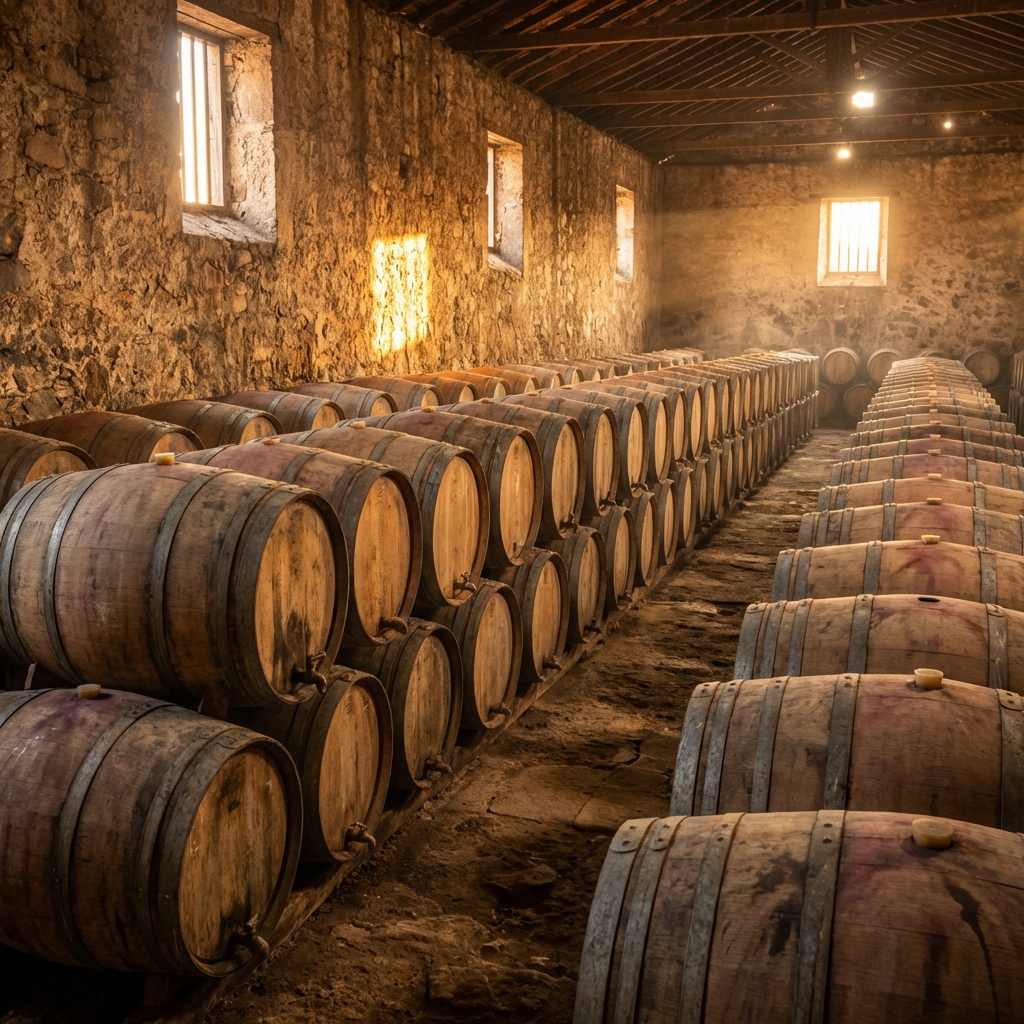
Reposado tequilas are aged for two to twelve months, while añejo spends one to three years in wood. Extra añejo matures for more than three years. Barrels may previously have held bourbon or other spirits.
Climate affects maturation. Warm temperatures accelerate interaction between spirit and wood, meaning even short ageing periods can have a strong impact.
Bottling
Before bottling, tequila is diluted with water to reach its final strength, typically around 40 percent ABV. Filtration and finishing choices vary by producer.
Why Production Matters
Tequila's character comes directly from production choices, starting in the agave fields and continuing through distillation and ageing.
Understanding how tequila is made helps explain the wide range of styles available, from vibrant and vegetal to smooth and oak-driven.
Once you understand the process, tasting tequila becomes a way to recognise those choices and explore the diversity of the category.