Every whisky starts the same way: with grain, water, yeast, and time. But somewhere between the raw ingredients and the finished bottle, something remarkable happens.
Understanding how whisky is made helps explain why different bottles taste so different. A bourbon and a Scotch may both be whisky, but their production paths shape everything from colour to flavour to finish.
This guide walks through the key stages of whisky production. The details vary between styles and regions, but the broad process applies to most whisky made around the world.
Ingredients
Whisky begins with four essential elements: water, grain, yeast, and time. Each one plays a crucial role in the final spirit.
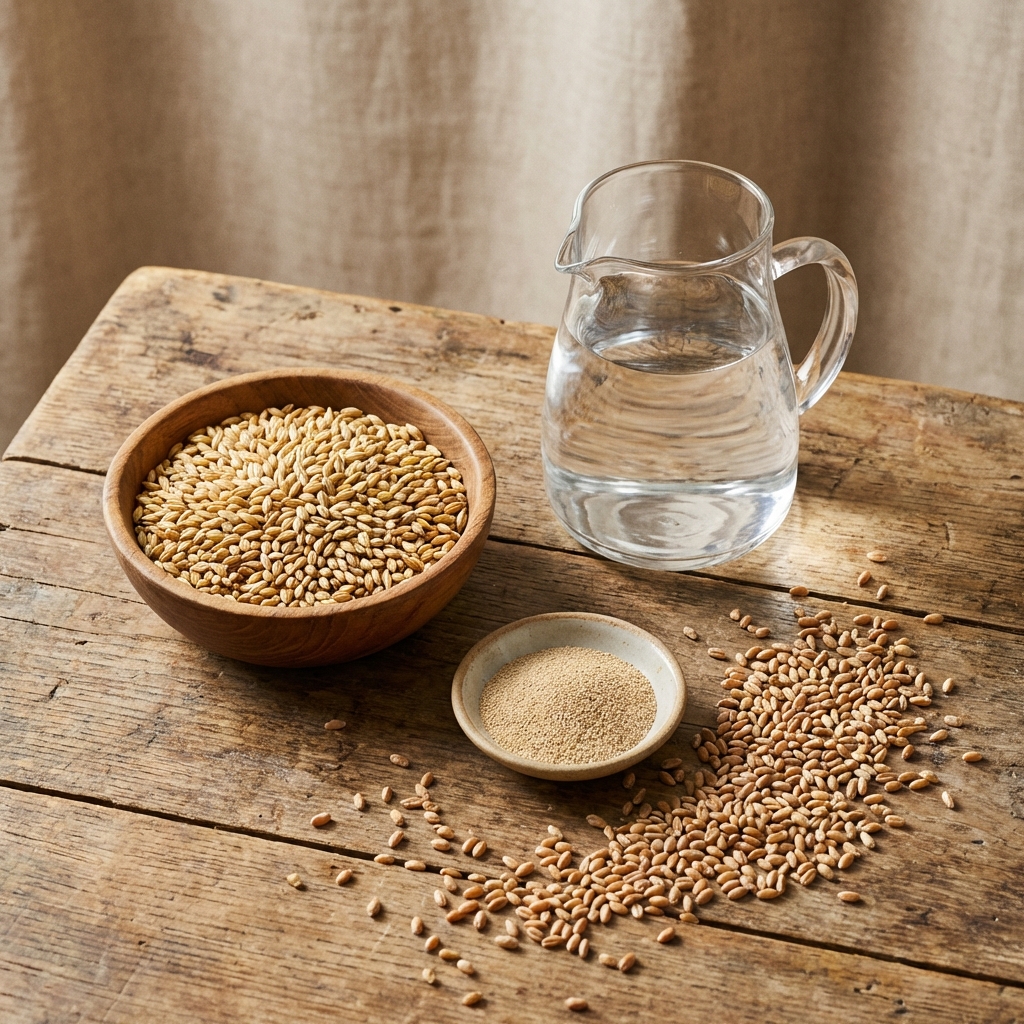
Water is used throughout the process, from mashing to dilution before bottling. The mineral content and purity of water vary by region, and some distilleries prize their local water source as a defining characteristic.
Grain provides the sugars that ferment into alcohol. Scotch malt whisky uses malted barley. Bourbon relies primarily on corn. Irish whiskey often blends different grains. Rye whisky, as the name suggests, features rye as the dominant grain. Each choice brings its own flavour profile.
Yeast converts those sugars into alcohol during fermentation. Different yeast strains produce different flavour compounds, making yeast selection an important but often overlooked decision.
Time is the invisible ingredient. Whisky must age in wood, and years in a cask transform raw spirit into something complex and drinkable. There are no shortcuts here.
Malting
Malting is the first step in whisky production, and it applies specifically to barley. The goal is to unlock the starches inside the grain so they can later be converted into fermentable sugars.
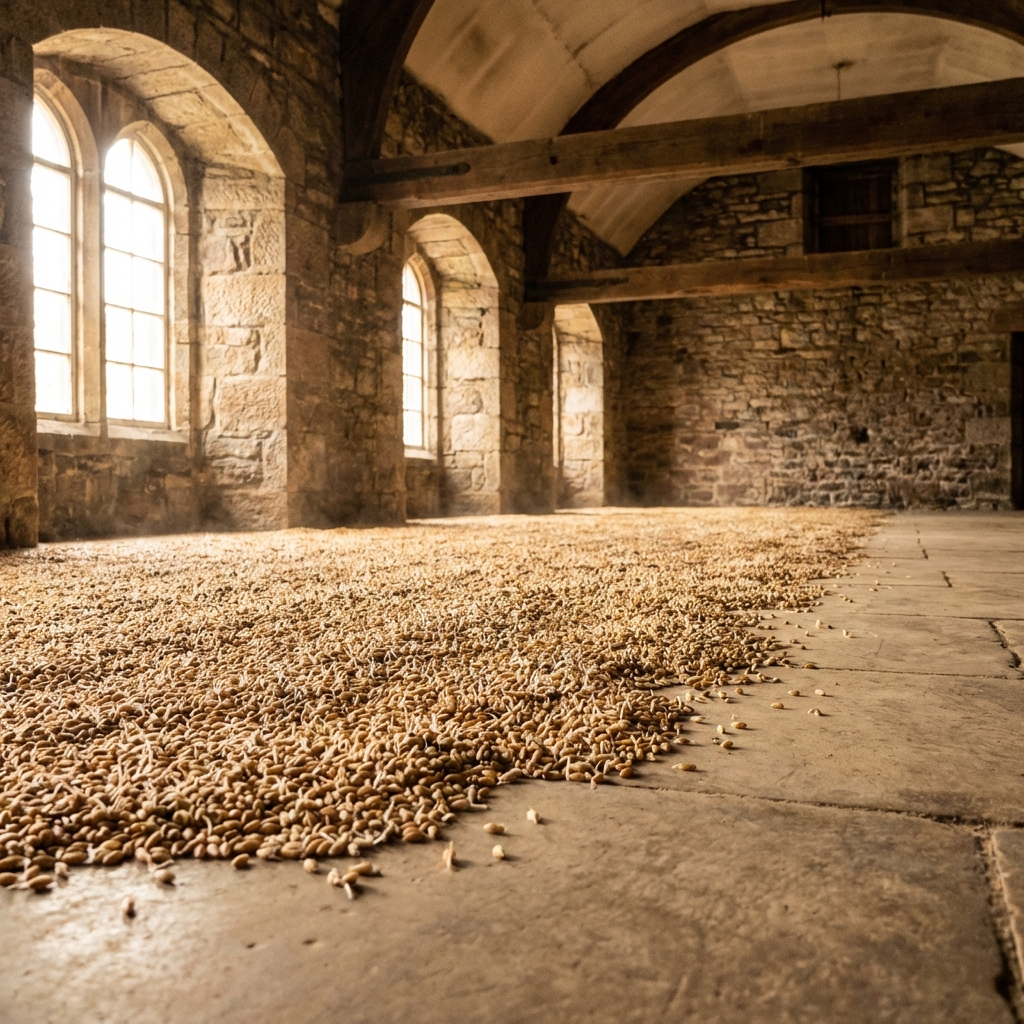
The process starts by soaking barley in water until it begins to germinate. As the grain sprouts, enzymes develop that will break down starch into sugar. The germination is then halted by drying the barley in a kiln.
Some distilleries burn peat during the drying process, which infuses the barley with smoky, earthy flavours. This is where the distinctive smokiness of certain Scotch whiskies originates.
Most distilleries today source their malted barley from specialist maltsters rather than malting on-site. But a handful still run their own floor maltings, turning the barley by hand in the traditional way.
Mashing
Once the barley is malted and dried, it gets ground into a coarse flour called grist. This grist is then mixed with hot water in a large vessel called a mash tun.
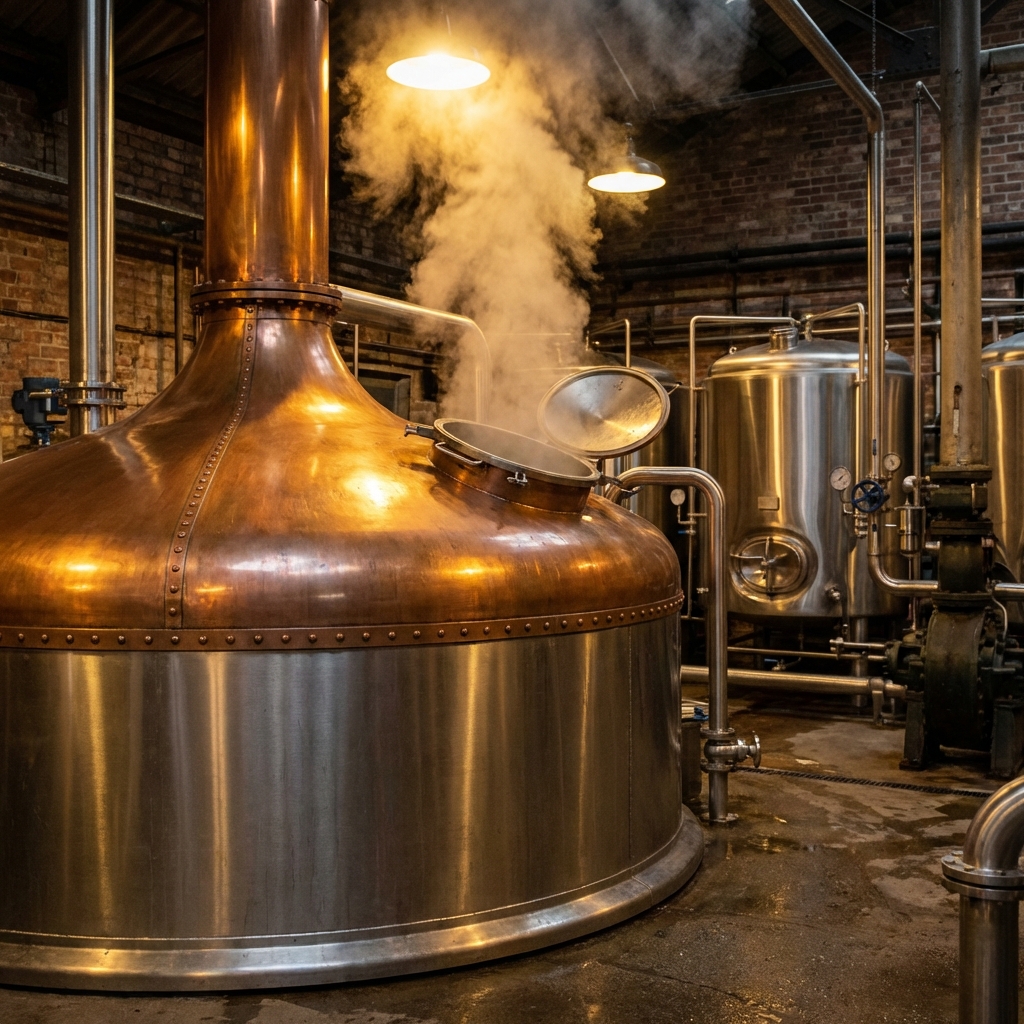
The purpose of mashing is to extract sugars from the grain. Those enzymes developed during malting now go to work, converting starches into fermentable sugars.
Temperature matters. The water is added at carefully controlled temperatures, typically in stages, to maximise sugar extraction. Too hot, and you risk destroying the enzymes. Too cool, and the conversion stalls.
The sugary liquid that drains from the mash tun is called wort. It looks a bit like sweet tea and smells pleasantly of malt and biscuit. This wort is what moves on to fermentation.
Fermentation
The wort is transferred to large vessels called washbacks, where yeast is added. Over the next two to four days, the yeast consumes the sugars and produces alcohol along with carbon dioxide.
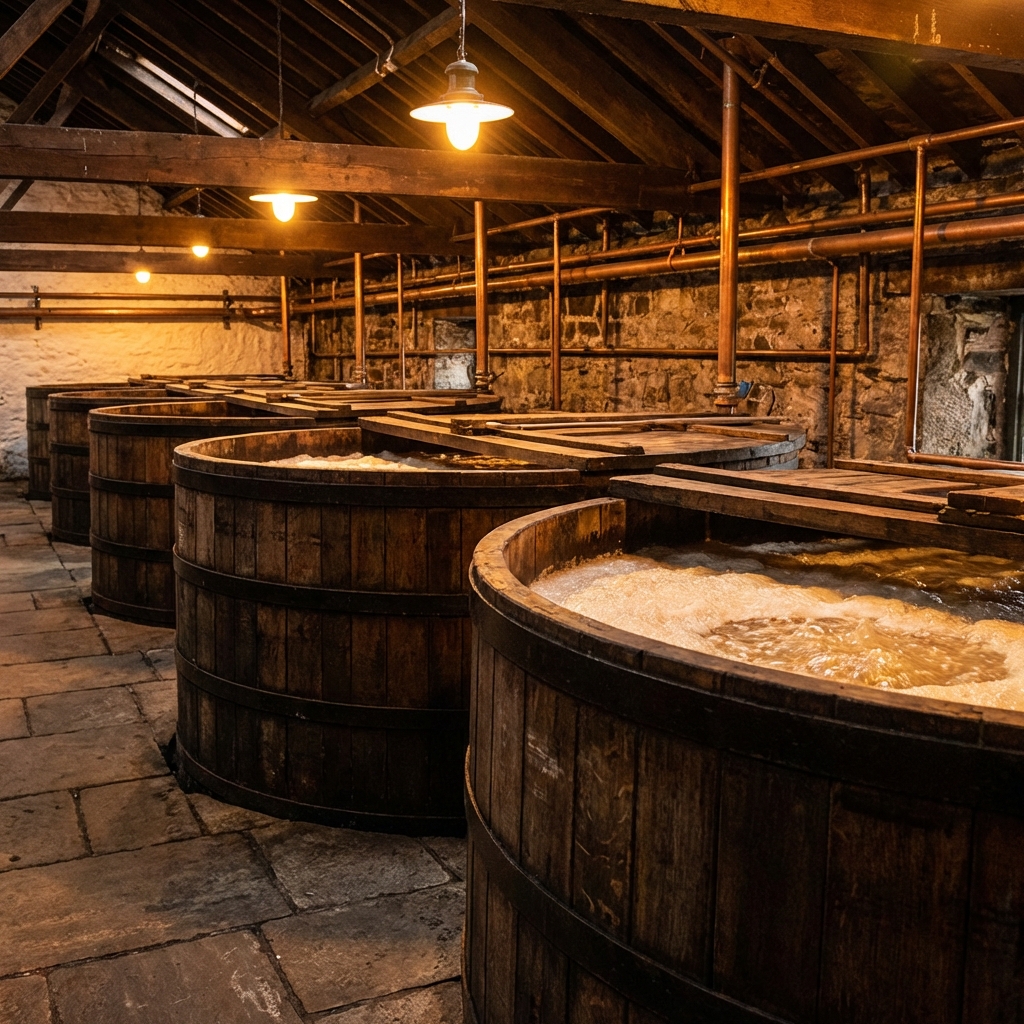
Fermentation is where flavour really begins to develop. The yeast produces not just alcohol but also esters, acids, and other compounds that contribute to the character of the final whisky.
Washbacks can be made from wood or stainless steel. Some distillers believe wooden washbacks contribute additional complexity through the natural bacteria they harbour. Others prefer the easier maintenance of steel. Both approaches produce excellent whisky.
By the end of fermentation, the liquid, now called wash, sits around seven to nine percent alcohol. It resembles a rough, cloudy beer. It is ready for distillation.
Distillation
Distillation concentrates the alcohol and separates desirable flavours from unwanted compounds. The wash is heated in a still, and because alcohol evaporates at a lower temperature than water, the vapours that rise are richer in alcohol.
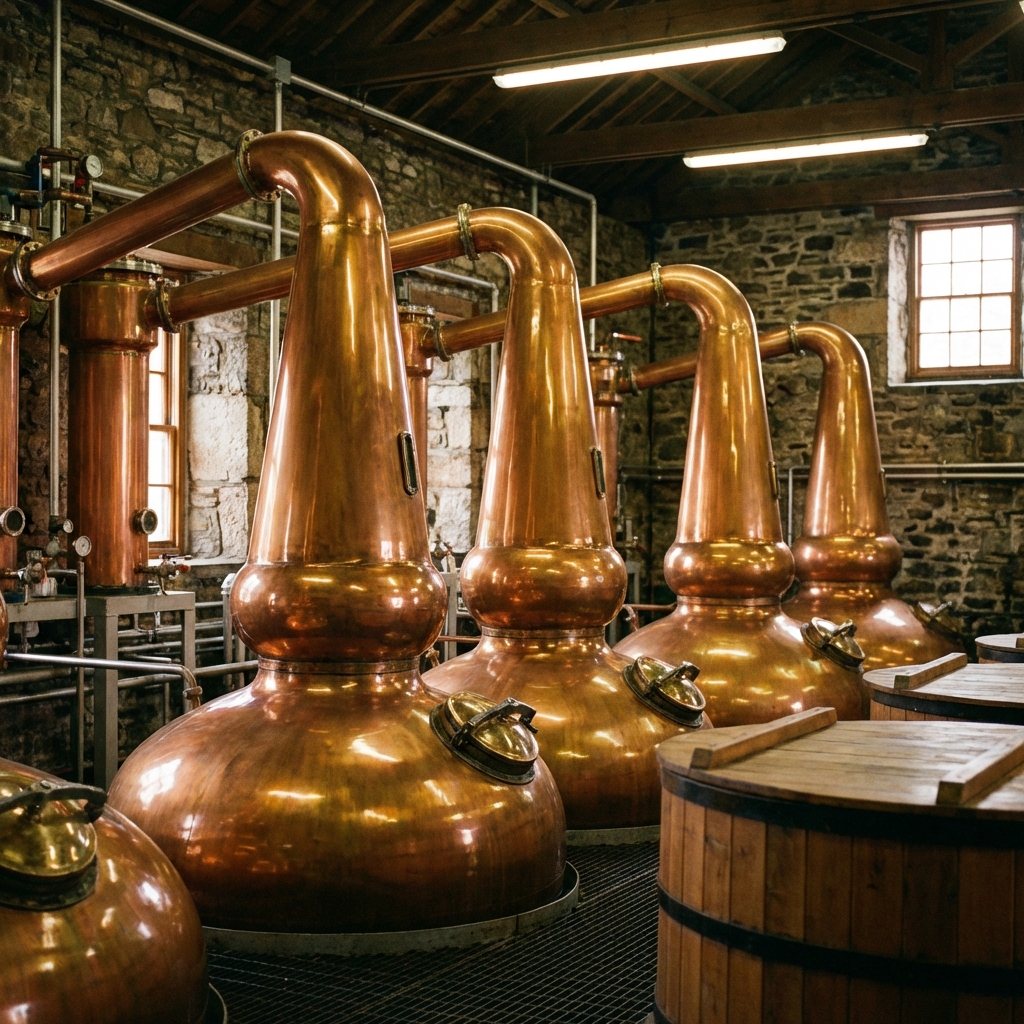
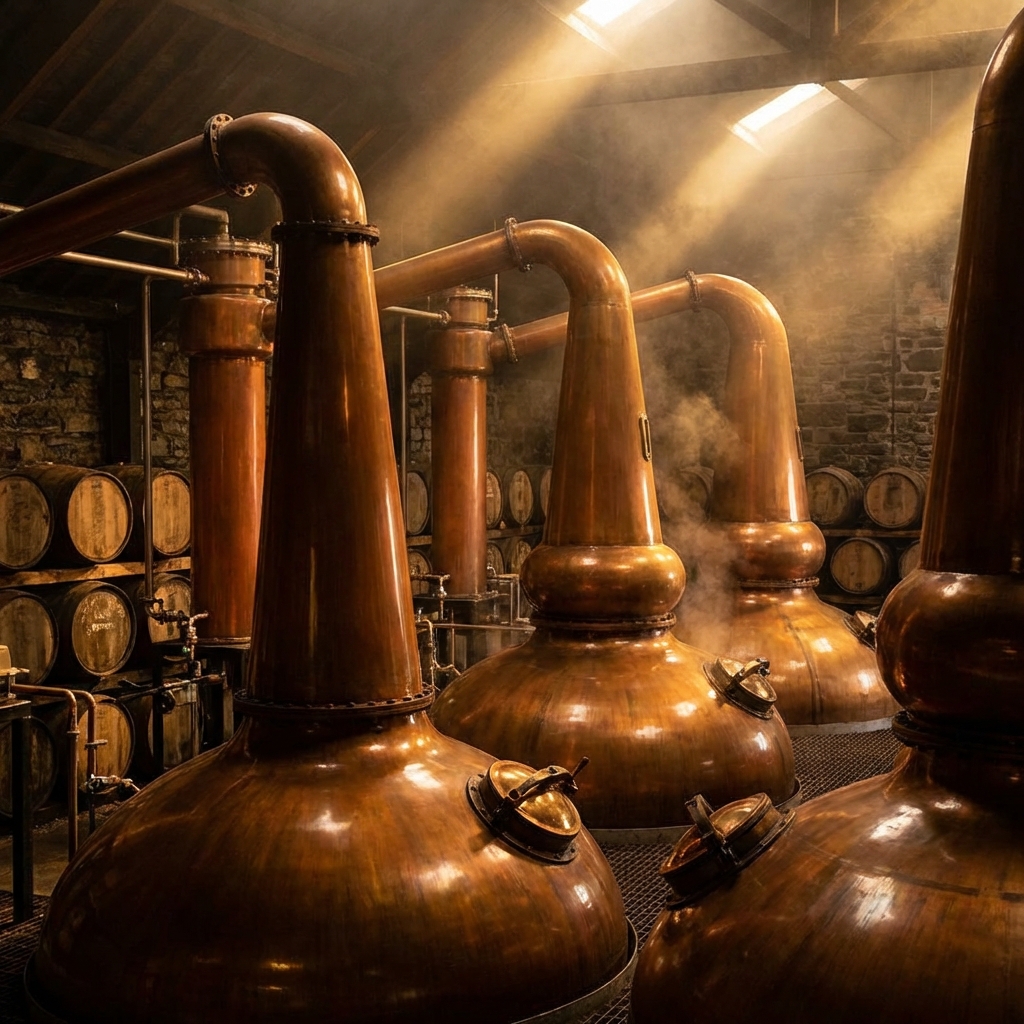
Most Scotch malt whisky is distilled twice in copper pot stills. The first distillation takes place in the wash still, producing a liquid called low wines. The second distillation in the spirit still refines this further, and the stillman carefully selects only the middle portion, the heart, for maturation.
Column stills, also called continuous stills, work differently. They can run continuously and produce a lighter, higher-proof spirit. Grain whisky and most bourbon use column distillation.
Copper plays a critical role regardless of still type. It reacts with sulphur compounds, removing harsh flavours and creating a cleaner, more palatable spirit. The shape and size of the still also influence character; tall stills tend to produce lighter spirits, while shorter, wider stills create heavier, more robust whisky.
Maturation
This is where whisky truly becomes whisky. Fresh spirit off the still is colourless and raw. It needs time in oak to develop the colour, complexity, and smoothness we associate with good whisky.
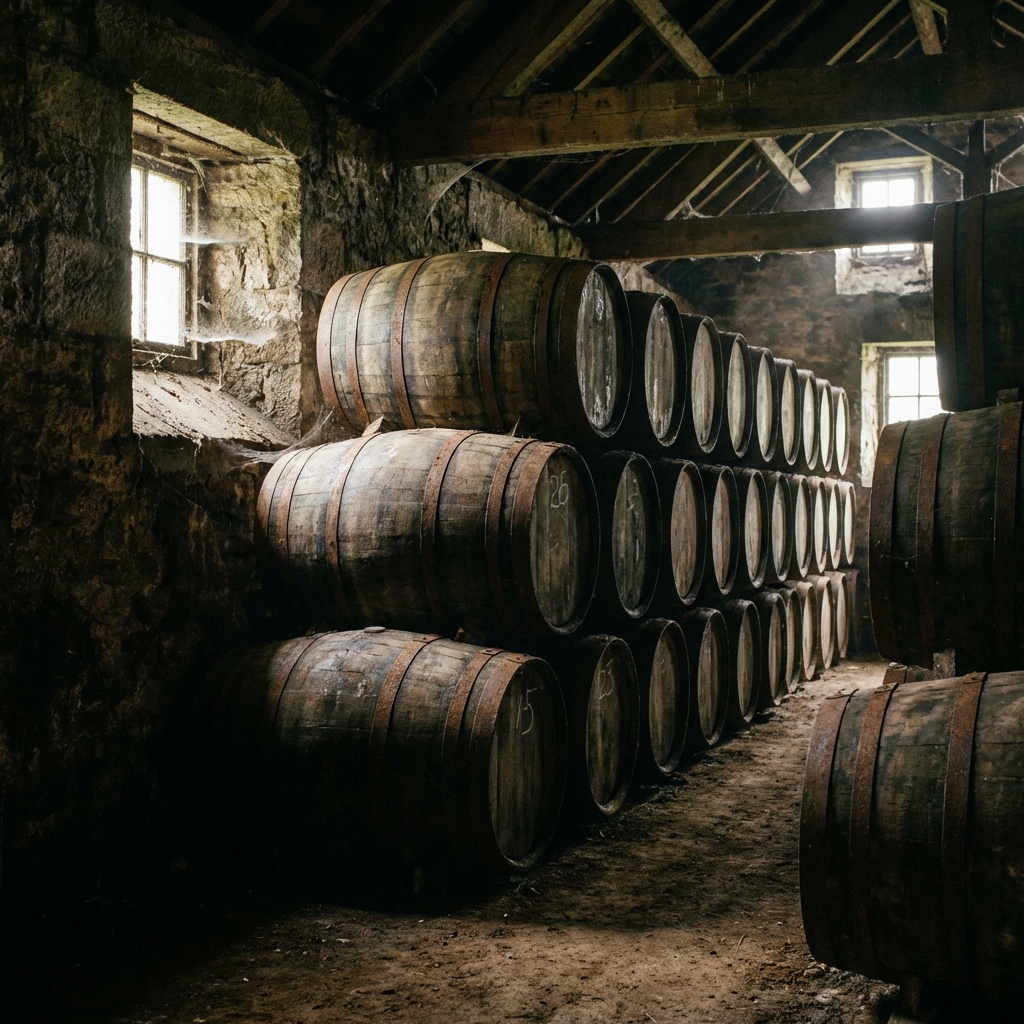
The cask does most of the work. Oak wood imparts vanillin, tannins, and other flavour compounds. Former bourbon barrels add notes of vanilla, caramel, and coconut. Sherry casks contribute dried fruit, spice, and richness. Some distilleries experiment with wine, port, or rum casks for additional finishes.
Climate affects the aging process. In Scotland's cool, damp conditions, whisky matures slowly over decades. In warmer climates like Kentucky, the interaction between spirit and wood is more intense, so bourbon often reaches maturity faster.
Each year, a portion of the whisky evaporates through the wood. This loss is known as the angel's share. In Scotland, it averages around two percent annually. In hotter countries, it can be significantly higher. What starts as a full cask gradually diminishes, leaving behind a more concentrated, more precious liquid.
Scotch whisky must age for a minimum of three years. Many distilleries age their whiskies far longer, with expressions commonly ranging from ten to twenty-five years or more.
Bottling
When the whisky has matured to the distiller's satisfaction, it is ready for bottling. But several decisions still need to be made.
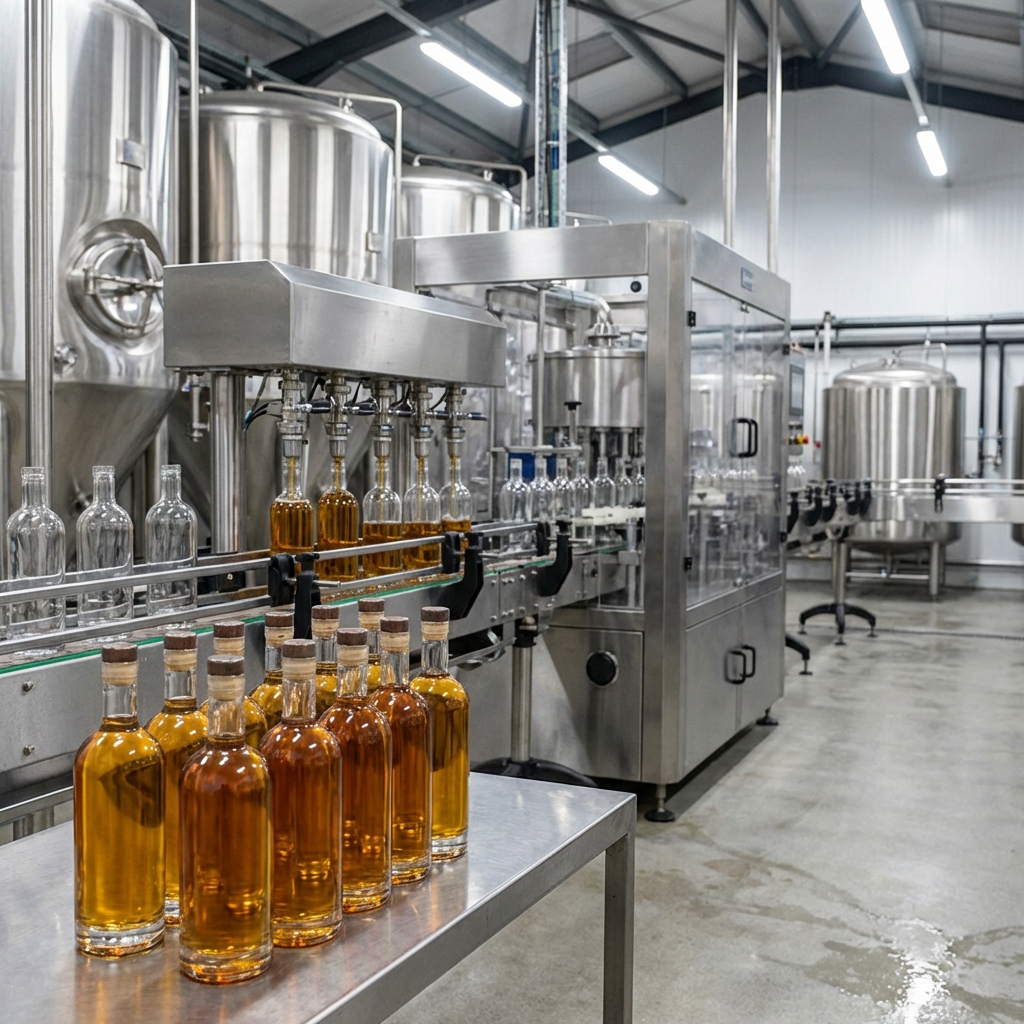
Whisky typically comes out of the cask at a higher strength than most people drink it. Water is added to bring it down to the desired bottling strength, usually around 40 to 46 percent ABV. Some whiskies are bottled at cask strength, without dilution, for those who prefer a more intense experience.
Chill filtration is a process that removes certain compounds to prevent the whisky from going cloudy when cold or when water is added. Some enthusiasts feel this strips away flavour and texture. Non-chill-filtered whiskies are increasingly popular among those who want the full experience.
Colour is another consideration. Whisky naturally takes on colour from the cask, but this can vary between batches. Some producers add a small amount of caramel colouring to ensure visual consistency. Others proudly declare their whisky is natural colour only.
None of these choices is inherently right or wrong. They are part of the philosophy each distillery brings to its whisky.
Why Production Matters
Every decision along the way, from the grain selected to the cask chosen to the length of maturation, shapes the whisky in your glass. Two distilleries using similar ingredients can produce completely different spirits based on their approach.
Understanding production helps you make sense of those differences. When you know that heavily peated malt creates smokiness, or that sherry cask aging adds richness, you start to predict what you might enjoy before you even taste it.
It also deepens appreciation. A ten-year-old whisky represents a decade of patient waiting, evaporation, and subtle transformation. The angel's share that vanished into the air is part of the story of what remains.
Whether you prefer the maritime peat of Islay, the orchard fruits of Speyside, the caramel sweetness of bourbon, or the clean grain of Irish whiskey, the production choices made along the way brought you there.
The best way to learn is to taste. Find bottles from different traditions, pay attention to how they differ, and start to connect what you know about production to what you experience in each glass.
Got a quick question first? Read our plain-answer Spirits FAQ →
Still torn between two styles? Compare bourbon against Scotch in the Spirit Showdown →