If you've ever picked up a bottle of Scotch and wondered what the label means when it says “Highland” or “Islay,” you're not alone.
Scotland's whisky regions are one of the first things people encounter when they start exploring single malts and they can seem a bit mysterious at first. But they don't need to be.
Whisky regions are simply a way of grouping distilleries by geography. They're useful as a starting point, a rough guide to what styles you might find, but they're not strict rules.
Think of them as helpful signposts, not flavour guarantees. A great way to start exploring.
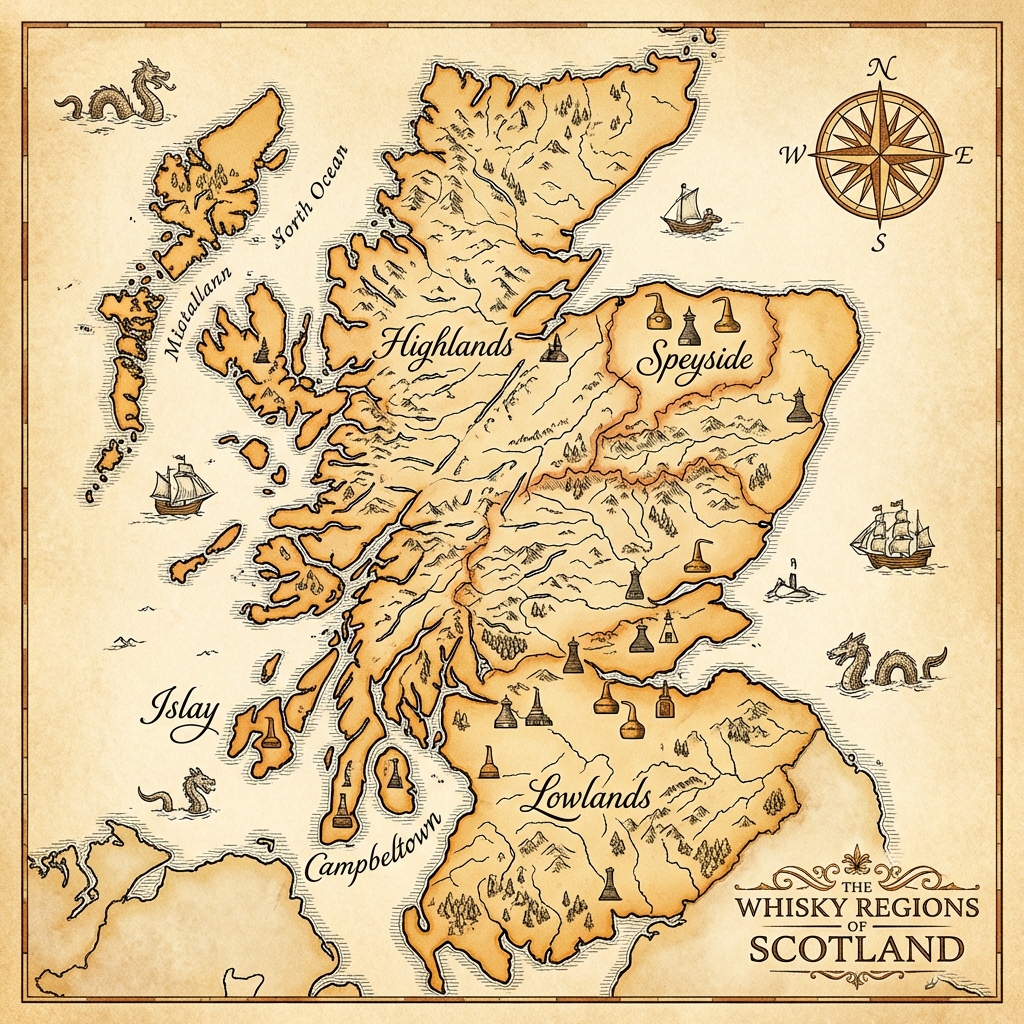
The five whisky regions
Scotland has five officially recognised whisky-producing regions: the Highlands, Speyside, Islay, the Lowlands, and Campbeltown. These have historical and legal significance, and they're still commonly used today, both on labels and in conversation.
Let's take a look at each one.
Highlands
The Highlands is Scotland's largest whisky region, stretching from the rugged north coast down to the central belt. It's a vast area, and that means you'll find a huge variety of styles here.
Some Highland whiskies are rich and full-bodied, with notes of dried fruit and spice. Others are lighter and more floral. Coastal distilleries often produce whiskies with a gentle maritime character, while those further inland might lean towards honey, heather, and malt.
Because of this diversity, the Highlands is a great region for exploration. You can try half a dozen Highland whiskies and find something different in each one.
Example distilleries: Glenmorangie, Dalmore, Glengoyne
Speyside
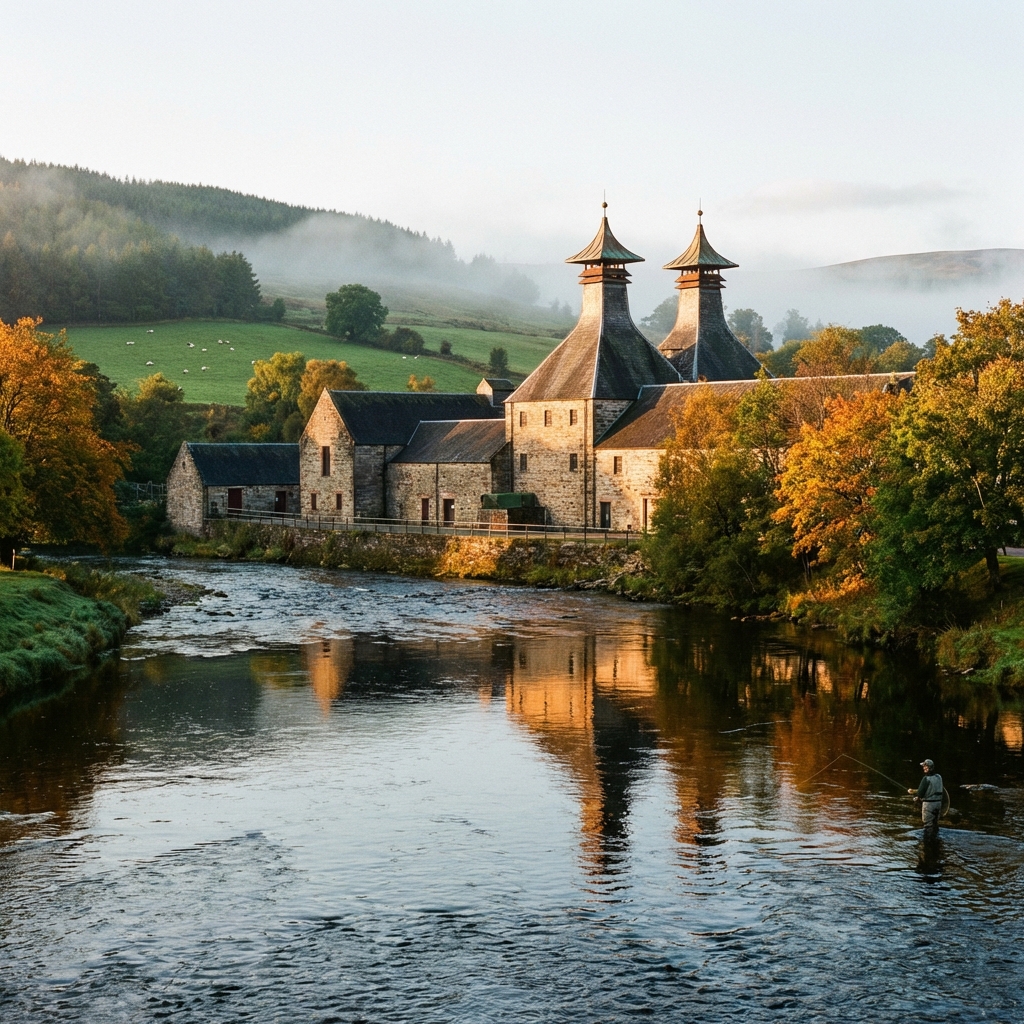
Technically part of the Highlands, Speyside has its own identity, and its own region status. Situated around the River Spey in the northeast of Scotland, it's home to the highest concentration of whisky distilleries anywhere in the world.
Speyside whiskies are often described as approachable and elegant. You'll frequently encounter flavours like apple, pear, honey, vanilla, and toffee, especially in whiskies aged in bourbon casks. Sherry-matured Speysides can be richer, with notes of dried fruit and Christmas cake.
Because of their broadly accessible character, Speyside whiskies are often recommended as a starting point for beginners. But don't let that fool you, there's plenty of depth here too.
Example distilleries: Macallan, Glenfiddich
Islay
Islay (pronounced “eye-lah”) is a small island off Scotland's west coast, and it punches well above its weight in the whisky world.
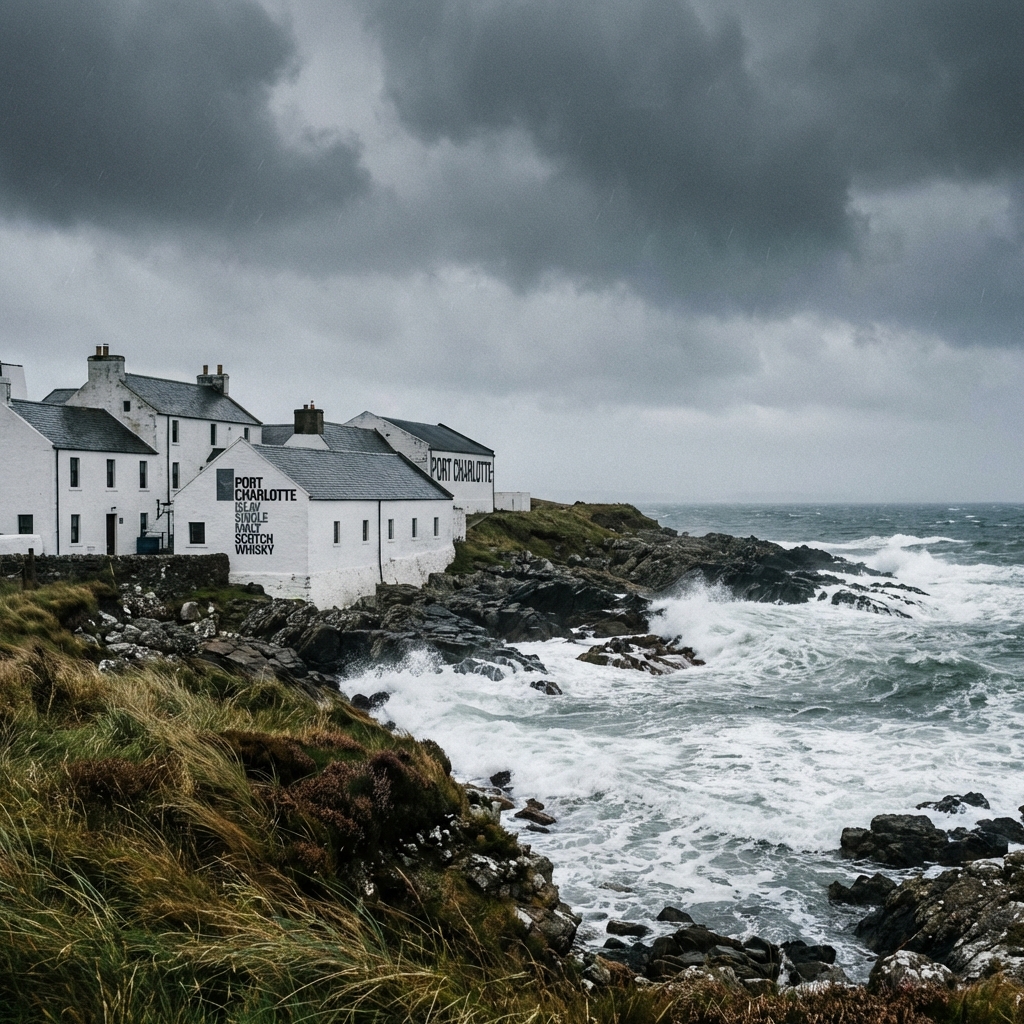
The island is famous for producing bold, heavily peated whiskies with intense smoky, medicinal, and maritime flavours. If you've ever tried a whisky that tasted like a bonfire on a beach, there's a good chance it came from Islay.
Notes of iodine, seaweed, tar, and brine are common here, alongside the unmistakable smokiness from drying malted barley over peat fires.
Islay whiskies are famously divisive. Some people fall in love instantly; others need a few tries. Either reaction is perfectly valid, and there are gentler options from the island if you want to ease in.
Example distilleries: Laphroaig, Lagavulin, Ardbeg
Lowlands
The Lowlands covers the southern part of Scotland, including the areas around Edinburgh and Glasgow. Historically, Lowland distilleries were known for producing lighter, more delicate whiskies, often triple-distilled for extra smoothness.
Traditional Lowland flavours include grass, citrus, honeysuckle, and light malt. These whiskies tend to be gentle on the palate, making them another good entry point for newcomers.
The region experienced a decline in the twentieth century, but it's now enjoying a revival. New distilleries are opening, and established names are gaining fresh attention.
The revival is not all whisky. In the far south west, near Newton Stewart, Crafty Distillery is one of the modern craft distilleries putting Galloway back on the map, making its gin from scratch with local botanicals. It is a good example of how much new life there is in the south of Scotland.
Example distilleries: Auchentoshan, Glenkinchie
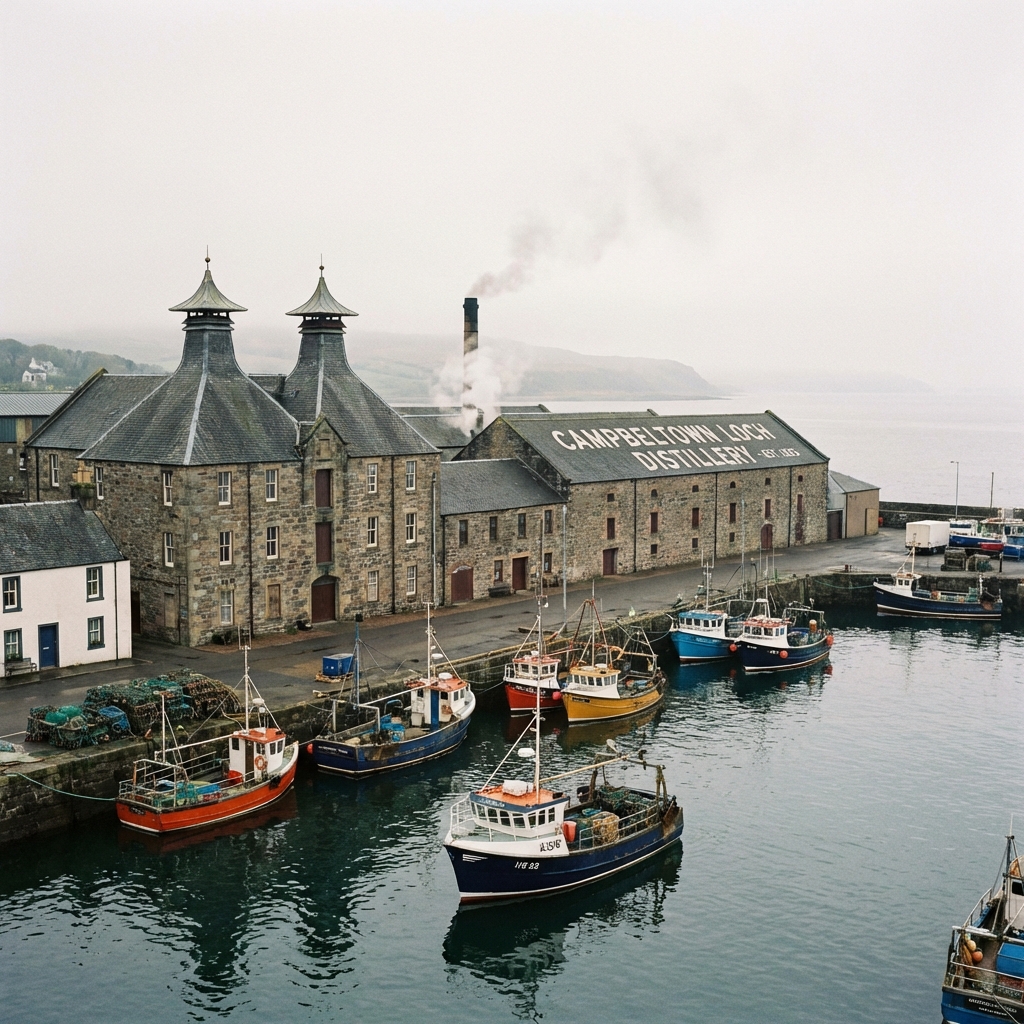
Campbeltown
Campbeltown is Scotland's smallest whisky region, just a single town on the Kintyre peninsula. But its significance in whisky history is enormous.
In the late 1800s, Campbeltown was known as the “whisky capital of the world,” with over thirty distilleries operating at its peak. Today, only a handful remain, but those that do produce some of the most distinctive whiskies in Scotland. Campbeltown malts often have a maritime, slightly briny character, along with notes of oil, salt, fruit, and a gentle smokiness.
Because of their complexity, Campbeltown whiskies tend to appeal more to experienced drinkers, but they're absolutely worth seeking out.
Example distilleries: Springbank, Glen Scotia
What about the islands?
You'll sometimes hear people talk about “the Islands” as if it were a sixth whisky region. It's not, officially, but it's a useful grouping all the same.
The Islands refers to distilleries on Scotland's other whisky-producing islands, places like Skye, Mull, Jura, Arran, and Orkney. Legally, most of these fall under the Highlands region (Islay has its own status), but they're often grouped together because of their shared maritime character.
Island whiskies can vary widely, from the peppery, coastal drams of Talisker on Skye to the lighter, honeyed malts of Arran. What they often share is a sense of place: sea salt, coastal air, and a ruggedness that comes from making whisky on remote, windswept islands.
Example distilleries: Talisker, Highland Park, Isle of Arran (Lochranza)
Do regions actually define flavour?
Here's the thing: regions are helpful, but they're not everything.
The flavour of a whisky depends on many factors, the barley, whether the malt was peated, the shape of the stills, the casks, how long it was aged, even the warehouse location. Two distilleries next door to each other can produce completely different whiskies.
So while a region gives you a rough idea of what to expect, it's not a guarantee. You might find a Speyside that's smokier than you expected, or an Islay that's surprisingly gentle.
That's part of what makes whisky interesting. Regions are a useful framework, but individual bottles always have the final say.
How to explore whisky regions yourself
If you're curious about exploring Scotland's whisky regions, the best advice is simply to start tasting. Pick up a bottle from a region you haven't tried, or order a dram and pay attention to where it comes from.
Over time, you'll start to notice patterns. Maybe you keep gravitating towards Speyside malts. Or perhaps you've developed an unexpected love for Islay's smoky intensity. Either way, it's your journey, there's no right answer.
The Distillery App can help with this. You can browse whiskies by region, keep track of bottles you've tried, and start to see what patterns emerge in your own taste. Remember keep track of your favourites as you go and we'll recommend new ones based on what you like!
A framework, not a rulebook
Scotland's whisky regions are a helpful roadmap for anyone starting to explore single malts. They give you a sense of place, a bit of history, and a rough idea of what to expect in the glass.
But don't let the labels limit you. The best way to understand whisky is to drink it, to try things you might not expect to like, to revisit bottles you weren't sure about, and to pay attention to what actually appeals to you.
Whisky is a personal journey. Regions are just one way to start making sense of it.