
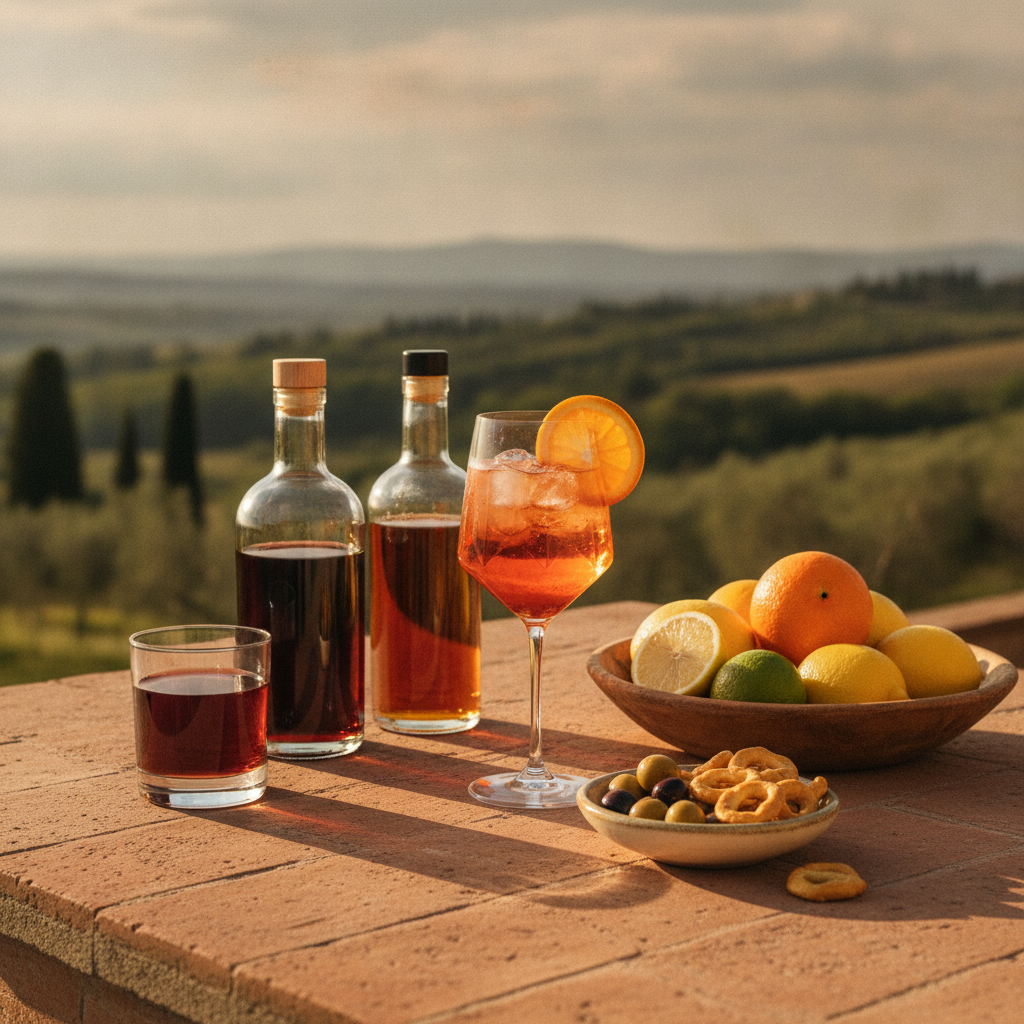
The aperitivo is the hour before dinner, and in Italy it is close to a national ritual. You pour something light and bitter, put a few salty things on the table, and let the evening slow down. It is not a party. It is a pause.
You do not need a bar full of bottles to do it well. Three or four of the right ones will carry a whole summer. Here is how the aperitivo works, and what to reach for.
We have just added a run of Italian bottles that fit the hour perfectly, so this feels like the moment to lay it out.
What the Aperitivo Is For
The word comes from the Latin for "to open". The idea is to open the appetite rather than fill it. Aperitivo drinks are usually lower in alcohol than a cocktail you would sip after dinner, and they lean bitter and citrus-led on purpose. Bitterness wakes up the palate.
The food matters as much as the drink. Olives, crisps, taralli, a little cheese, some cured meat. Nothing heavy. The point is to nibble while you talk, not to eat a meal standing up.
Timing is simple. Late afternoon into early evening, roughly six to eight. Long enough to unwind, short enough to still be hungry for dinner.
Start With a Spritz
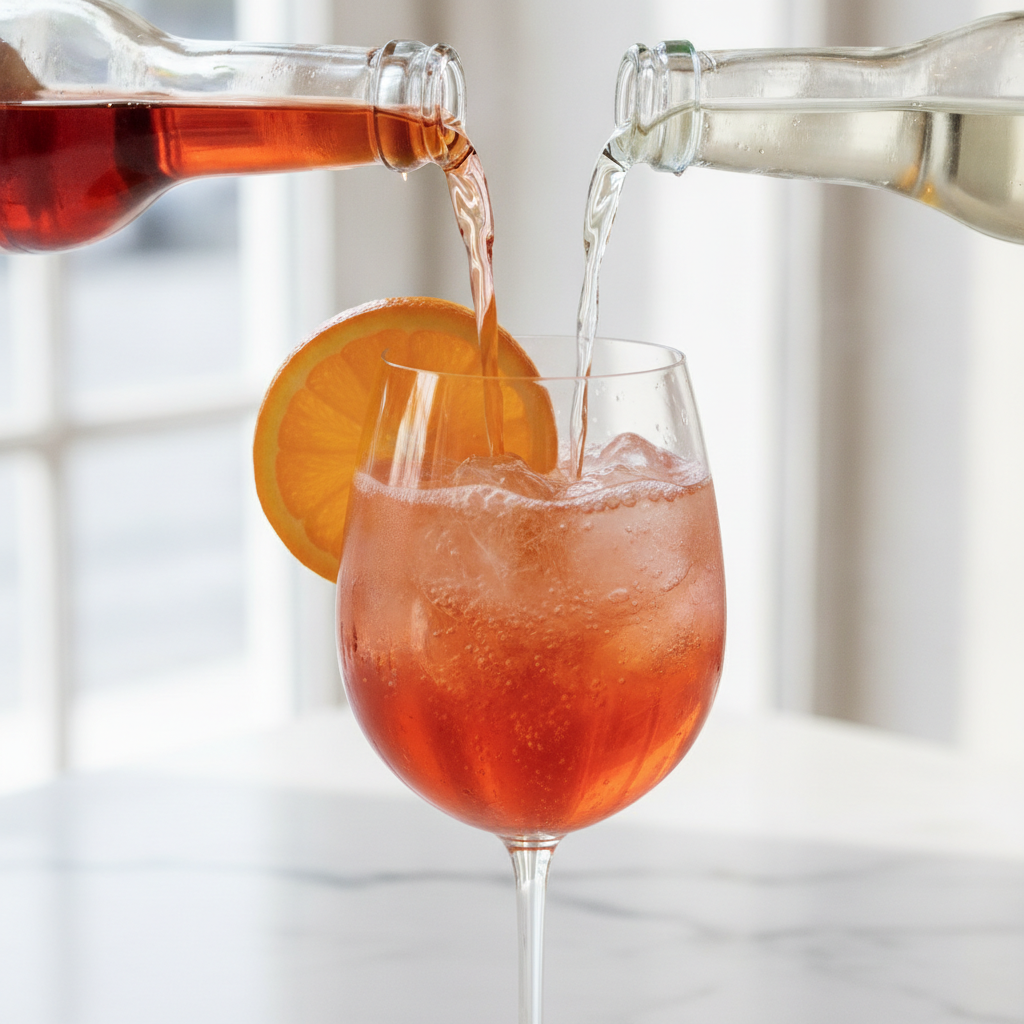
The spritz is the easiest way in, and the most forgiving. Fill a wine glass with ice, add three parts sparkling wine, two parts a red bitter aperitif, and a splash of soda. Stir once, drop in an orange slice, and you are done. Prosecco is traditional, but any dry fizz works.
The bitter is where the character lives. A classic red aperitivo brings orange peel, rhubarb, and a clean bitter finish. If you want something with a little more grip, a grappa-based aperitivo like Poli Airone Rosso leans richer and more herbal, which suits an evening that is edging towards autumn.
Try: Poli Airone Rosso Aperitivo, or a standard red bitter for the house spritz
Keep a Vermouth di Torino Open
Vermouth is wine that has been fortified and flavoured with botanicals, and Turin is its spiritual home. Vermouth di Torino is a protected name, made to a real standard, and it deserves better than a dusty bottle at the back of the cupboard.
Serve it the Italian way, which is on its own. Pour a measure over ice, add a twist of lemon or a green olive, and drink it slowly. A dry white vermouth like Scarpa Extra Dry is crisp and savoury, all the more so when it is cold. A red vermouth is sweeter and rounder, and it doubles as the backbone of a negroni later on.
Once open, keep vermouth in the fridge and drink it within a few weeks. It is a wine, and it will fade if you leave it out.
Try: Scarpa Extra Dry Vermouth di Torino, served cold with a twist
Build One Negroni
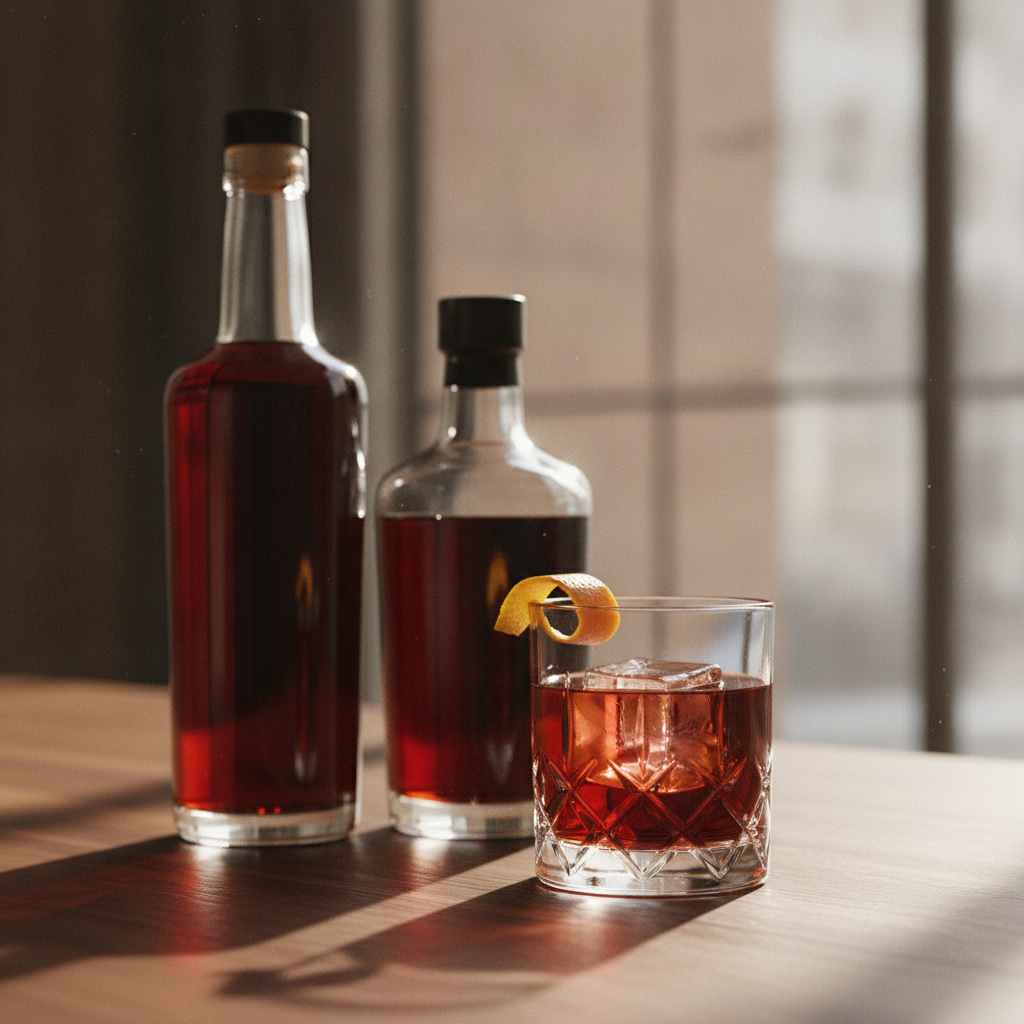
If the spritz is the gentle opener, the negroni is the one with a spine. It is three things in equal measure: gin, red vermouth, and a red bitter liqueur. Stir over ice, strain into a short glass over one big cube, and finish with an orange twist.
The balance is the whole trick. The gin keeps it dry, the vermouth softens it, and the bitter pulls it all tight at the end. It is stronger than a spritz, so one is usually plenty before dinner.
A cask-finished bitter, if you can find one, gives the drink a little extra depth. But the standard build is a classic for a reason, and it needs no improving to be very good.
Finish With Amaro or Limoncello
The aperitivo opens the appetite. Its cousin, the digestivo, closes the meal. The two bookend an Italian evening, and the same table can handle both.
Amaro is the classic after-dinner pour. It is a bitter herbal liqueur, gently sweet, and every region has its own. A softer, more floral style like Amaro Santoni is a good place to start if bitterness is new to you. Serve it neat at room temperature, or over ice if the night is warm.
For something brighter, limoncello is hard to beat in July. Keep the bottle in the freezer and pour it into small chilled glasses. A proper one, like Pallini Limoncello, tastes of real lemon peel rather than sweets. Lazzaroni's amaretto and limoncino are worth a place on the same shelf if you like to give people a choice.
Try: Amaro Santoni, Pallini Limoncello, Lazzaroni Amaretto
A Short Shopping List
You can build the whole hour from four bottles and a bag of ice. Everything below earns its place more than once.
- •A red bitter aperitif for spritzes and negronis. The one bottle that does the most work.
- •A vermouth di Torino, dry or red. Drink it on its own, then use it in a negroni.
- •A bottle of dry fizz for the spritz. Prosecco is classic, any dry sparkling wine will do.
- •An amaro or a limoncello to close the night. This is the one you pour when nobody wants to leave.
Add olives, crisps, and a couple of citrus fruits, and you have an aperitivo hour that costs less than a round in a bar and lasts a lot longer.