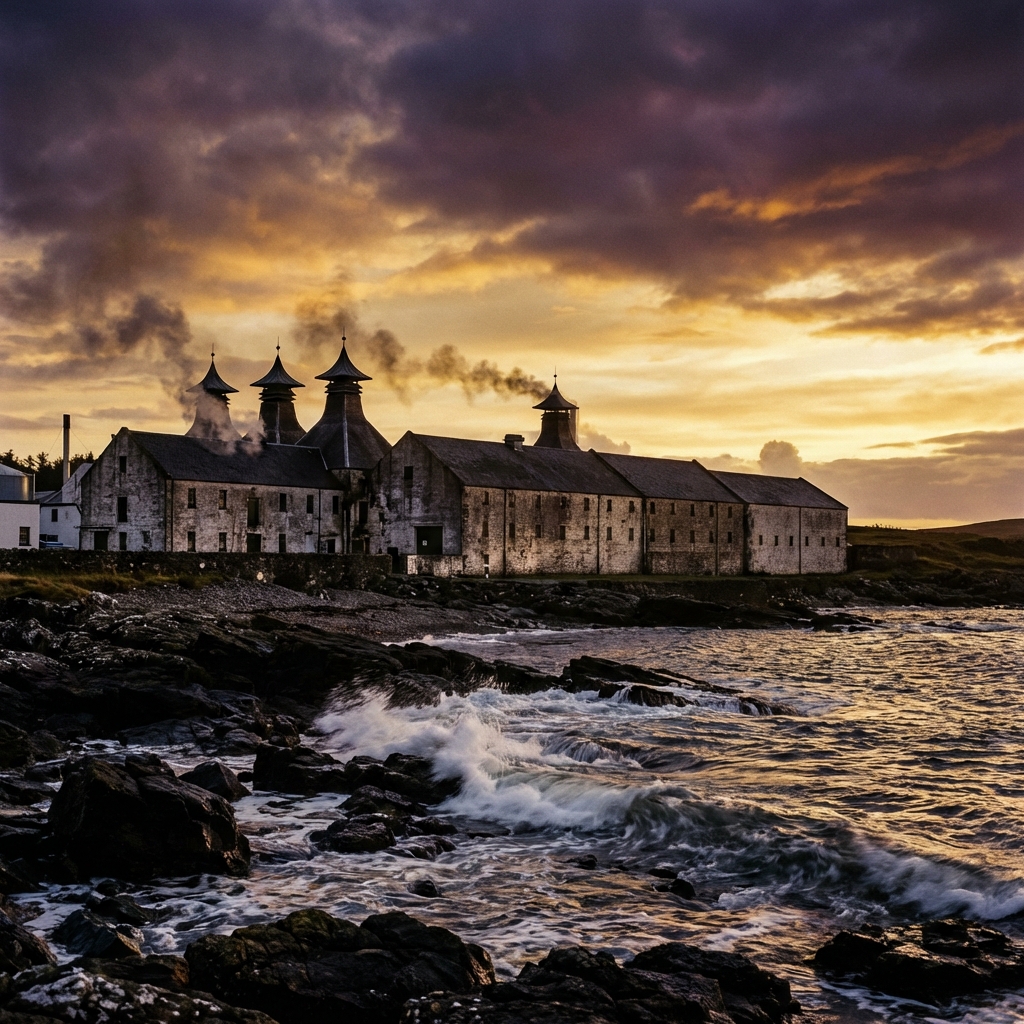
If you've ever tasted an Islay whisky and thought it smelled like a bonfire by the sea, you aren't imagining things. While not every whisky from the island is a smoke-bomb, Islay is the undisputed capital of the peated style.
But where does that intensity actually come from? The answer is a mix of geology, chemistry, and a very old way of drying barley.
What is Islay whisky?
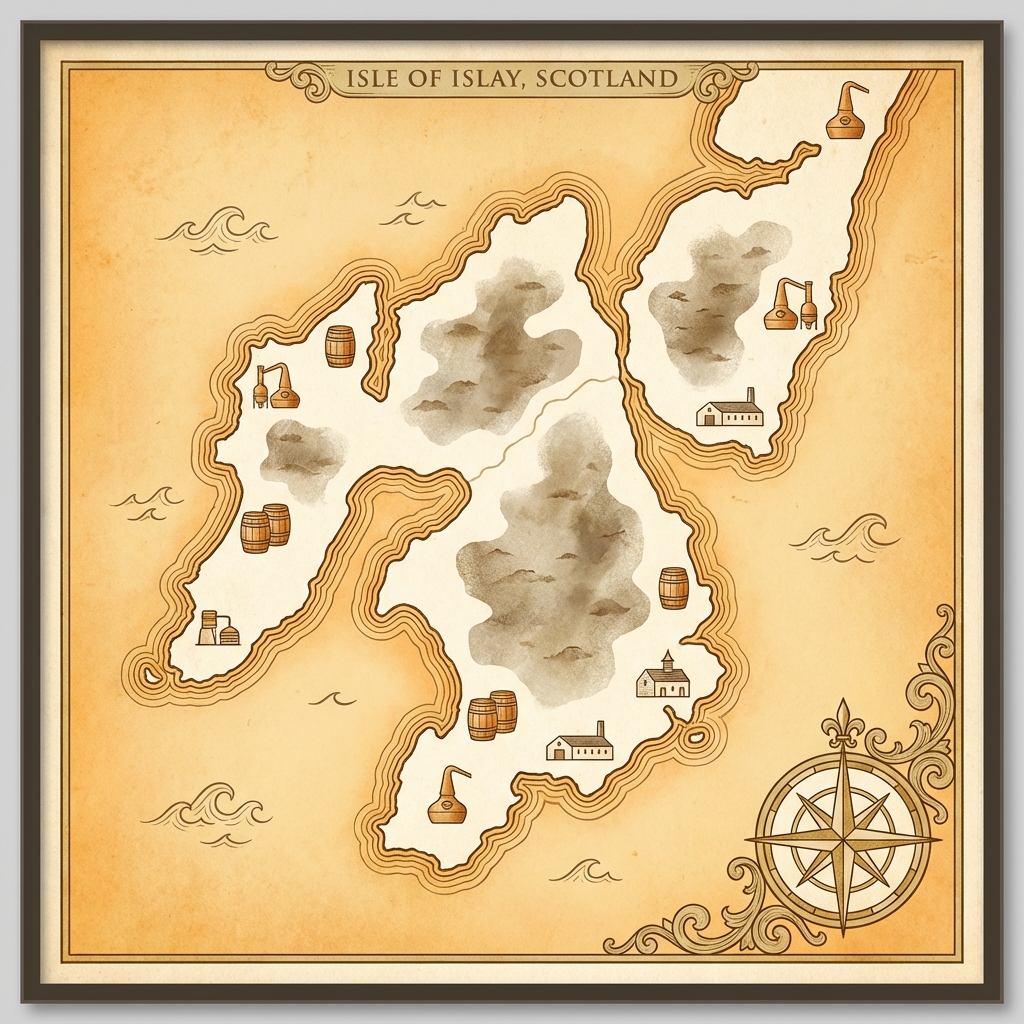
Islay whisky is a Single Malt Scotch produced on the Isle of Islay, the southernmost island of the Inner Hebrides. It is best known for bold flavours like wood smoke, ash, and maritime notes often described as medicinal (think iodine or bandages).
It starts with the peat
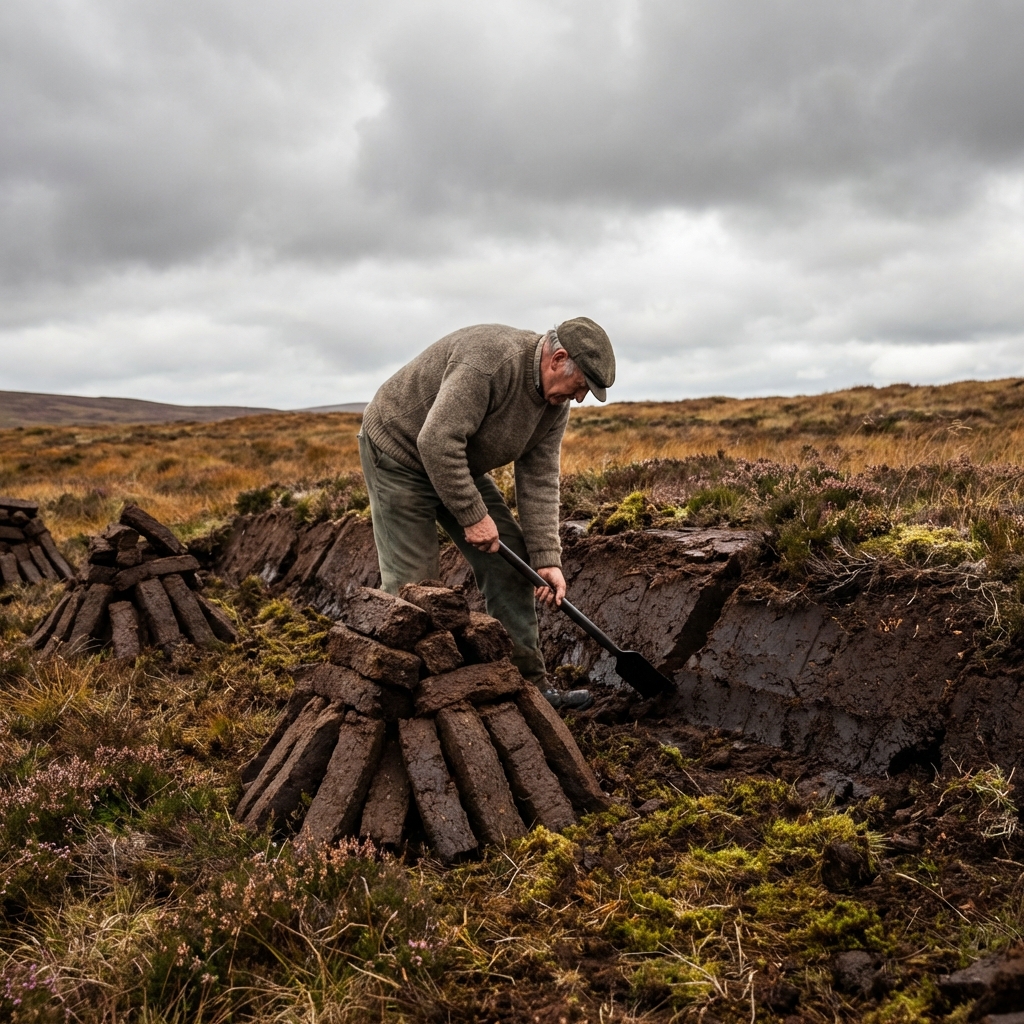
The primary reason Islay whisky tastes smoky is peat.
Peat is essentially soil made of partially decomposed vegetation—moss, heather, and grass—that has been compressed in waterlogged bogs for thousands of years. Before coal or electricity arrived on the island, this was the only readily available fuel source.
To make whisky, you first have to trick barley into sprouting (malting) and then stop it by drying it out in a kiln. On Islay, they traditionally fired those kilns with peat.
When peat burns, it produces a thick, pungent smoke containing compounds called phenols. These phenols bind to the damp barley husk. Remarkably, that smoky flavour survives the entire brewing and distillation process to end up in your glass 10 years later.
PPM: How we measure smoke
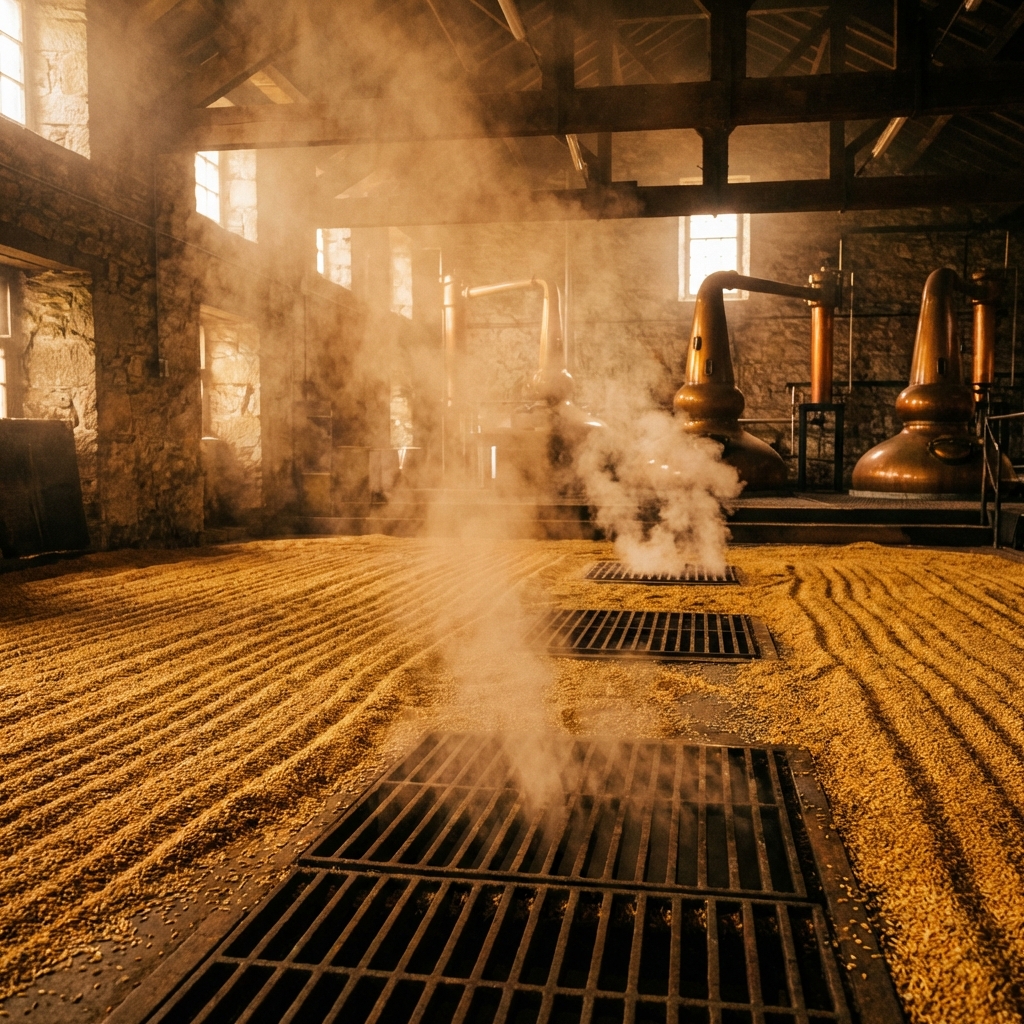
If you get into Islay whisky, you will hear people talk about PPM (parts per million). This is the scientific measurement of those phenolic compounds.
However, there is a catch: PPM is measured in the malted barley, not the liquid in the bottle.
By the time you get to new make spirit (and later, a bottled whisky), the phenol numbers and the way the smoke presents can be very different. Years in oak tend to soften the smoke and integrate it, making it feel less aggressive than the raw numbers suggest.
A whisky with a high PPM number might taste softer than you expect, depending on cut points and how the still was run. But as a rough guide:
- Unpeated / Light (0–15 PPM): Bunnahabhain, Bruichladdich Classic Laddie.
- Medium (15–30 PPM): Bowmore.
- Heavy (30–55+ PPM): Caol Ila, Laphroaig, Lagavulin, Ardbeg.
What about the sea air?
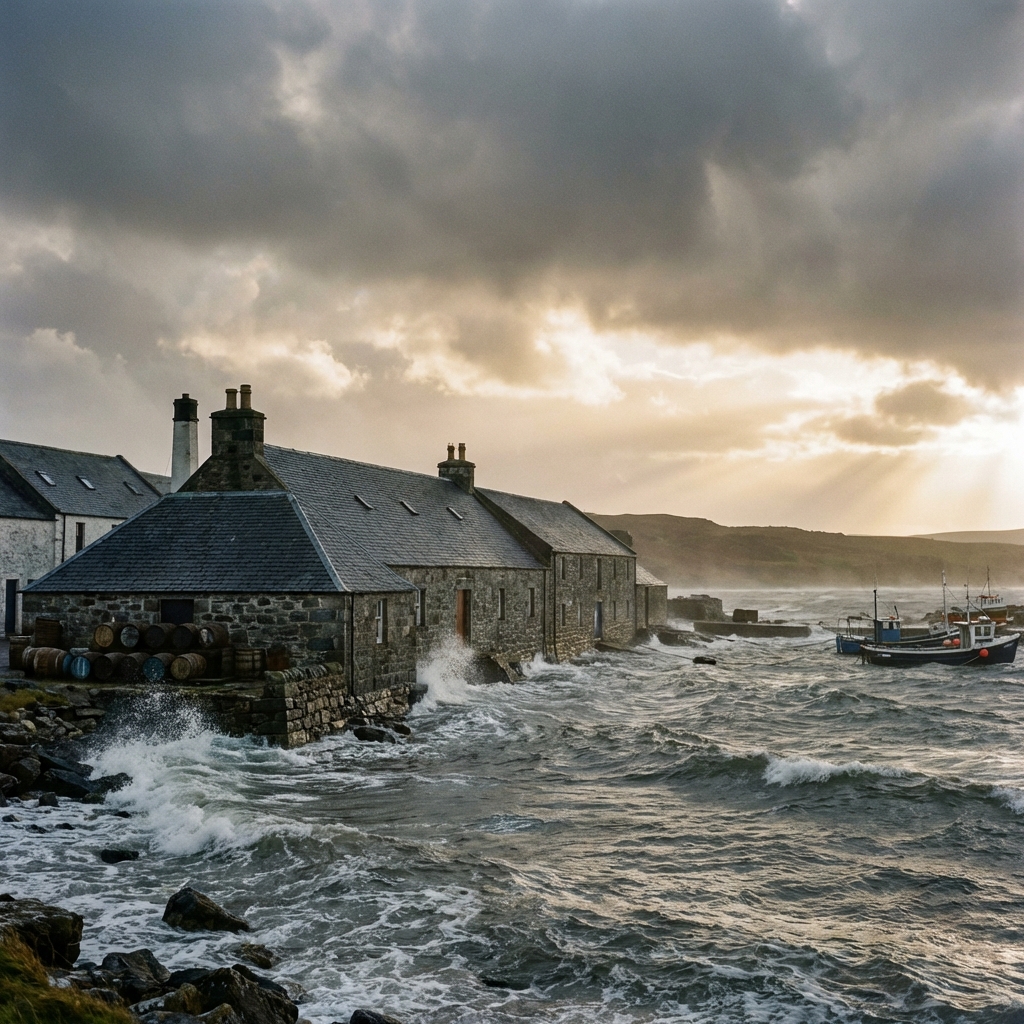
Many Islay whiskies have a distinct salty, briny character. The romantic explanation is that the casks "breathe" in the sea air while resting in warehouses that sit just metres from the crashing waves.
While the maritime climate definitely impacts maturation (mostly by keeping temperature swings low and humidity high), the "coastal" character is usually more about peating style and distillery character than the barrel literally soaking up sea spray.
Islay peat forms in a maritime environment, and Islay’s peated style often leans toward medicinal, coastal notes. Those flavours come from the specific mix of phenolic compounds carried in peat smoke—and how each distillery makes and matures its spirit.
Quick Questions
Why does Islay whisky taste like iodine?
That medicinal note (often compared to Laphroaig) comes from the specific makeup of Islay peat. Because the island's bogs are formed in a unique environment, the smoke carries distinctive chemical compounds (like cresols and xylenols) that our brains often interpret as "hospital," "medicinal," or "iodine" smells.
Is all Islay whisky smoky?
No. While the island is famous for smoke, distilleries like Bunnahabhain and Bruichladdich produce excellent unpeated whiskies. They still have the oily, coastal texture of an Islay dram, just without the bonfire hit.
Is smoky whisky stronger?
Not in terms of alcohol. A 40% ABV smoky whisky has the same alcohol content as a 40% floral one. The "strength" you feel is purely flavour intensity. However, because peat lovers tend to be enthusiasts, many smoky whiskies are bottled at higher proofs (46% or Cask Strength) to preserve texture.
Slàinte mhath!
Ready to try a dram?