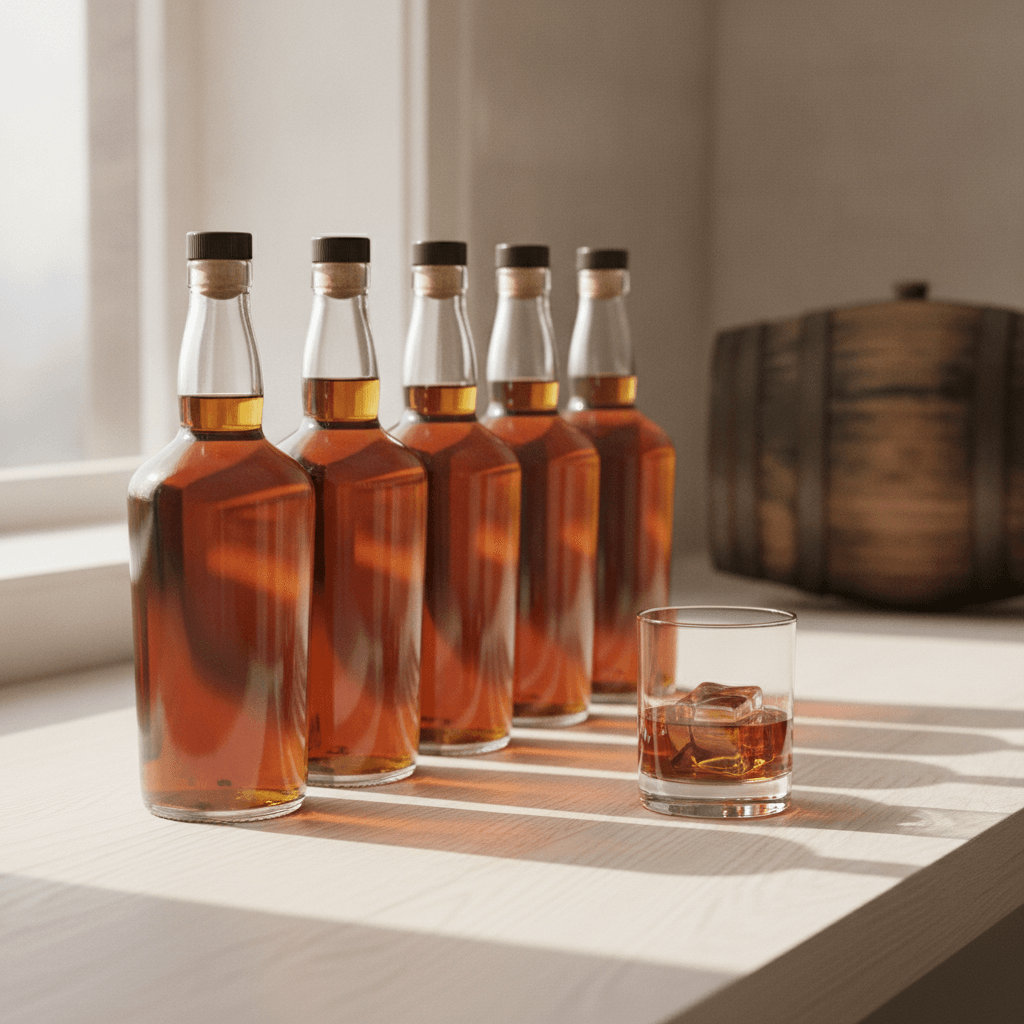
Bourbon is the easiest brown spirit to buy badly. The shelf is full of handsome bottles making big claims, half the words on the label are unregulated marketing, and the price range runs from pocket change to silly money without much telling you where the quality sits.
So this is a guide by budget. Three bands: a first bottle, a proper step up, and something for an occasion. Before the picks, a short section on what the regulated words actually mean, because knowing those four or five terms saves you more money than any single recommendation here.
Prices are rough UK guides and they move about, so treat the bands as a way of grouping bottles rather than a quote. Everything mentioned is the kind of thing you can find on a normal shelf. You can see the American shelf on The Distillery App.
What to buy first, in short
If you want the answer without the reading:
- Around £30: a standard Kentucky straight bourbon from a big, long-running distillery. Wild Turkey, Buffalo Trace and Four Roses all sit here. Buy one, mix with it, learn what corn sweetness tastes like.
- Around £50: step up to a small batch or a single barrel. Michter's US*1 is the one that keeps coming up again and again with our readers, and it is a soft, caramel-rich pour that makes the case for drinking bourbon neat.
- Around £100: an age-stated or cask-strength bottling. More oak, more weight, more alcohol to play with, and the point at which bourbon stops being a mixer and becomes a sipping whiskey.
If you only ever buy one bottle, buy in the middle band. The jump from £30 to £50 bourbon is the biggest step in quality per pound in the whole category. The jump from £50 to £100 is real, but it is a smaller one.
What the label actually means
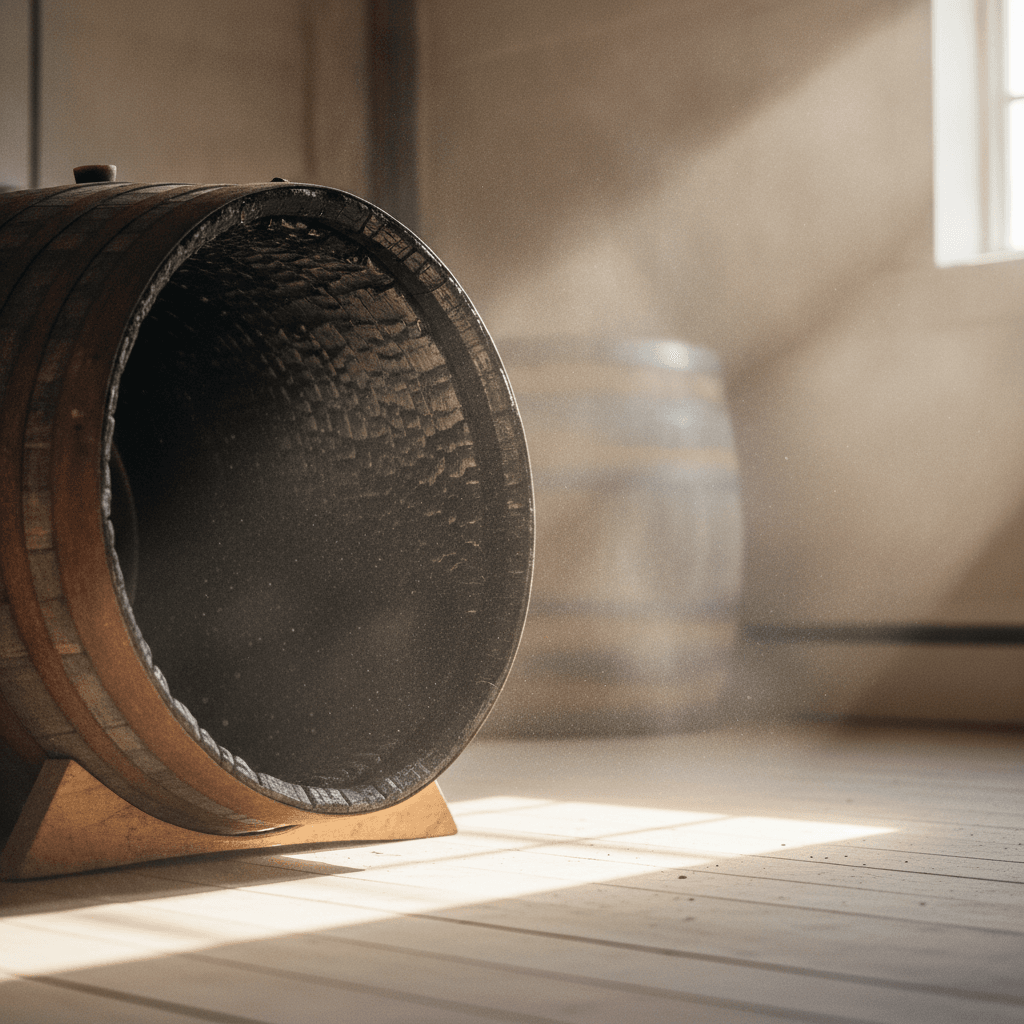
Bourbon is a legal term. It has to be made in the United States from a grain mash that is at least 51% corn, and it has to go into new charred oak containers. That last rule is the important one. Scotch mostly ages in casks that held something else first, so it borrows flavour gently. Bourbon goes into fresh, burnt-out wood every time, which is why it tastes of vanilla, caramel and baking spice from the start.
Straight bourbon means it has been aged at least two years with nothing added. If it is under four, the label must state the age. In practice, most straight bourbon on a UK shelf is older than four.
Bottled in bond is the one worth knowing. It means the whiskey is the product of one distillery, from one distilling season, aged at least four years in a federally supervised warehouse, and bottled at exactly 50% ABV. It is an old anti-fraud law, and it survives as the clearest quality guarantee on the shelf. A bonded bottle is never a bad buy.
Small batch and single barrel are different in kind. Single barrel is literal: the bottle came from one cask, so it will vary slightly from the next one, which is part of the fun. Small batch is not defined by law at all. It means the distillery married a smaller number of barrels than usual, and that number is whatever they want it to be. Treat small batch as a sign of intent rather than a promise.
Two more. Cask strength or barrel proof means undiluted, usually somewhere around 55 to 65% ABV, and it wants water. Sour mash appears on plenty of labels and tells you almost nothing, because nearly every bourbon is made that way.
Around £30: your first bottle
At this price you are buying a distillery's standard bottling, and the big Kentucky names are good at this. These are the workhorses: the bottle for an Old Fashioned on a Friday, for a highball with ginger ale, for the back of the cupboard that you are glad is there.
Buffalo Trace is the easy, friendly one, soft brown sugar and a little mint. Wild Turkey 101 goes the other way, bottled hot and leaning into rye spice and orange peel, and it is the better bottle if you want your cocktails to actually taste of whiskey. Four Roses sits in the middle, floral and light, and is a good pour if you find bourbon too sweet in general.
Do not spend less than this. Below about £25 you are mostly buying young spirit and caramel colouring, and the sweetness turns sticky rather than rounded.
Drink it: in an Old Fashioned, a whiskey sour, or long with ginger ale and a wedge of lime.
Around £50: the step up
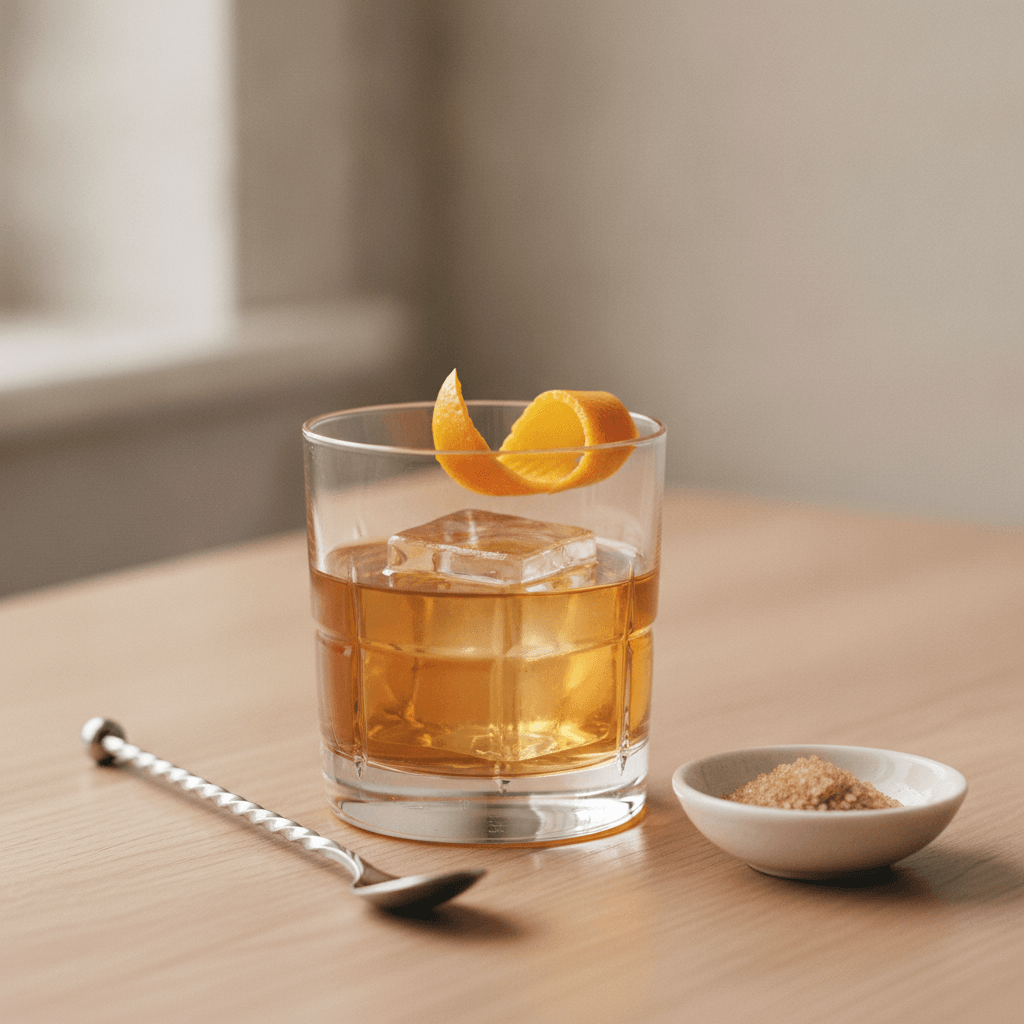
This is the band to buy in. The whiskey has usually had longer in wood, it is often bottled a little stronger, and the texture changes noticeably. You get a rounder, oilier mouthfeel instead of a thin sweet rush.
Michter's US*1 Bourbon is a firm favourite with our community, and it is the bottle we would hand to someone who says they do not like bourbon. It is gentler than most, all vanilla and soft caramel with a touch of toasted nut, and it finishes long rather than hot. Pour it neat and it behaves like a sipping whiskey. It is also the one bourbon on the site people keep going back to, so if you want the crowd's answer, that is it.
Anything bottled in bond belongs in this conversation too, and often costs less than the badge suggests. Jack Daniel's Bonded is Tennessee whiskey rather than bourbon by name, charcoal-mellowed before the cask, but it is the same family and a bigger, bolder pour than the standard bottling. Woodford Reserve and Knob Creek are the other names you will meet most often around this price, the first polished and dessert-like, the second darker and nuttier.
Drink it: neat in a small glass first, then over one big cube.
Around £100: something for an occasion
Up here you are paying for one of two things: age, or strength. Age statements of ten years and up give you deeper oak, dried fruit and tobacco, and a drier finish than the sweet younger stuff. Cask strength gives you concentration, and the ability to dilute it to exactly where you want it.
Cask strength is the better value of the two, and the more interesting bottle to own. Pour a small measure, taste it neat, then add water a few drops at a time. Somewhere on the way down the whiskey opens up and the fruit arrives. Finding that point yourself is genuinely good fun, and it means one bottle gives you several different drinks.
Be careful with the limited editions and the allocated bottles at this price. Scarcity is not flavour. A widely available cask-strength bourbon will usually out-drink a hyped bottle costing twice as much, and you can buy it again when it runs out.
Drink it: neat, with water added drop by drop until it blooms.
If you are coming from Scotch
Expect it to taste sweeter and broader, and do not read that as simpler. The new-oak rule front-loads the flavour, so bourbon arrives faster and bigger than a malt of the same age. A four-year-old bourbon has taken more from its cask than a twelve-year-old Scotch has.
That also means age works differently. An old bourbon is not automatically a better one, because wood can take over. Plenty of the best bottles in this guide carry no age statement at all. If you want the mechanics behind all of it, our explainer on how whisky is made covers grain to glass, and our buyer's guide to whisky in 2026 sets American whiskey next to the rest of the family.
How to choose
Start with what you will do with it. If most of it is going into cocktails, buy in the first band and buy something bottled at a decent strength, because the mixer will flatten anything delicate. If you want to sit with a glass, spend the extra and buy in the middle band.
Then use the two labels that are regulated. Bottled in bond tells you the age, the strength and the single distillery in three words. Cask strength tells you nothing has been watered away. Everything else on the front of the bottle is a story, and some of those stories are better than the whiskey inside.
One last thing. Buy two glasses rather than one expensive bottle. Tasting a £30 bourbon next to a £50 one, side by side, teaches you more about your own palate in ten minutes than a year of reading guides like this.