Vodka has a reputation problem. People are told it should taste of nothing, so they treat every bottle as interchangeable and buy on price or on the shape of the glass. That is a shame, because a good vodka has real character, and the gap between the cheap and the considered is wider than most spirits.
The catch is that vodka is also the easiest spirit to sell on marketing alone. A heavy bottle and a story about being distilled a great many times can add a lot to the price and very little to the glass. This guide is about seeing past that, so you can spend your money where it actually shows up.
If you want the mechanics of how the spirit is made first, our explainer on how vodka is made covers the process. Here we are looking at what to buy.
What "Premium" Actually Means
"Premium" is not a legal term. Nobody checks it. On a vodka shelf it usually signals a higher price and better packaging, and sometimes, but not always, a better spirit inside.
The things that genuinely change how a vodka tastes are simpler than the marketing suggests: what it is made from, how carefully it was distilled, the water it is cut with, and whether the producer chased pure neutrality or left a little character in. A bottle that does those well is worth paying for. A bottle that just distilled the same neutral grain spirit a dozen extra times and printed the number on the label is not.
A useful rule: be suspicious of any claim that is easy to print and hard to taste. "Distilled seven times" and "filtered through diamonds" are easy to print. Texture, weight, and a clean finish are what you actually drink.
Start With the Base Ingredient
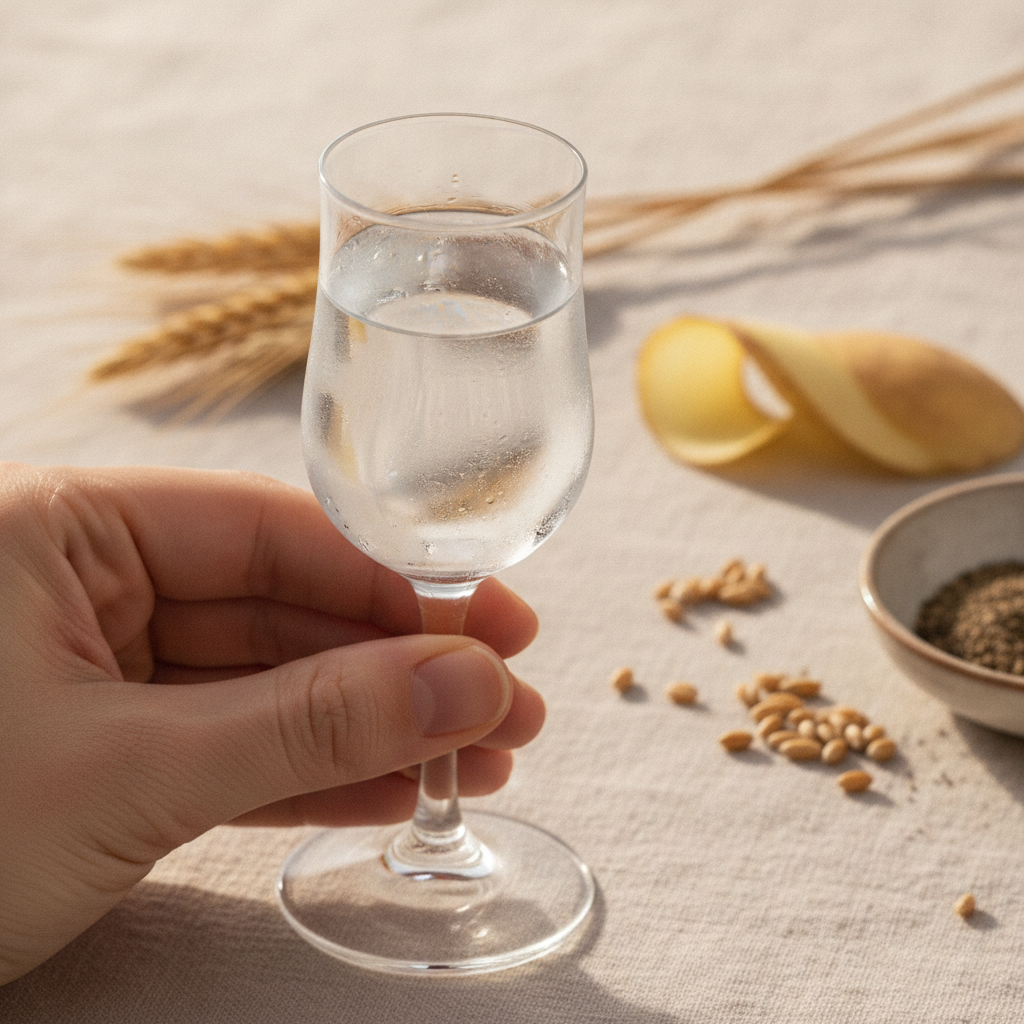
Vodka can be made from almost anything with sugar or starch, and the base leaves a fingerprint even after distillation. This is the single most useful thing to know when you buy, because it tells you what to expect before you open the bottle.
Wheat vodka tends to be soft, clean, and a little sweet, which is why so much of the mainstream market is wheat based. Rye is firmer and drier, often with a peppery, savoury edge that sipping drinkers love. Potato vodka is fuller and rounder, with a creamy weight that carries beautifully neat. Grape-based vodka is lighter and faintly floral. Some producers use maize or a mix of grains for a gentle, easy profile.
None of these is better than the others in the abstract. But if you like a vodka with body to sip slowly, a rye or a potato spirit is a better place to start than a light wheat one. Good producers state the base on the label. If a bottle hides what it is made from, that tells you something too.
Distillation and Filtration, in Plain English
Every vodka is distilled to a high strength to strip out flavour and impurities, then filtered, often through charcoal. The aim is a clean spirit. The debate is how clean you want it.
Distil and filter hard enough and you approach pure neutral alcohol and water, which is precise but can feel a bit empty. Ease off, and you keep a whisper of the base grain or potato, which is where a lot of the pleasure in craft vodka lives. Neither approach is a mistake. It is a choice, and the better craft distillers make it on purpose.
This is why the "distilled X times" number is close to meaningless on its own. More distillation removes character, it does not add it. What matters is judgement: knowing when to stop. You cannot read that off the label, which is exactly why tasting matters.
The Tiers, and How to Spot Them
Roughly, vodka sorts into three tiers. The lines are blurry and price is only a rough guide, but knowing the shape of the market helps you place any bottle in front of you.
The everyday tier is built for mixing. It is clean, correct, and disappears into a screwdriver or a cranberry, which is the whole point. There is nothing wrong with it. You just would not sit and sip it, and you should not pay premium money for it.
The premium tier is where you start paying for real care: a named base ingredient, better water, a smoother texture. The good ones here are clean but not hollow, and they hold up neat over ice. The trap in this tier is the bottle that is all packaging. Judge it on how it feels in the mouth, not how it feels in the hand.
The craft tier is made by smaller distilleries that treat vodka as a spirit with a point of view, often single-estate grain or potato, distilled to keep a little character rather than scrub it all away. This is the tier that most rewards drinking neat, and the one our catalogue has grown the fastest.
How to Taste Vodka Neat
Chill the bottle, but do not freeze it solid. Ice-cold hides flaws, which is handy for a rough vodka and a waste of a good one. Fridge-cold, or a short spell in the freezer, is about right. Cellar temperature is fine too if you want everything on show.
Pour a small measure into a proper glass, a small wine glass or a tulip works well, and give it a moment. Vodka is quiet, so you have to meet it halfway. Nose it gently. You are looking for clean grain, a little sweetness, maybe a floral or peppery note depending on the base. What you do not want is a harsh solvent burn or a chemical edge.
Then feel it. Texture is where premium vodka earns its keep: weight on the tongue, a soft or oily roundness, and a finish that stays clean rather than turning bitter or hot. A great vodka feels like something. A poor one feels like sharp water.
What to Look For on the Shelf
Buy for how you will drink it. If it is going into long drinks and martinis all summer, a clean wheat or mixed-grain vodka from the premium tier does everything you need and leaves money in your pocket. If you want a bottle to pour neat and think about, lean into a rye or potato spirit from a craft producer.
On the label, reward the producers who tell you things: the base ingredient, where it is made, who made it. Be wary of the ones selling a number or a gemstone. And trust your own palate over the price sticker. The best vodka for you is the one whose texture and finish you actually enjoy, not the one that costs the most.
For a summer serve, a good vodka makes a cleaner, sharper martini than most people expect, and it carries a soda-and-citrus long drink without getting in the way. The better the base spirit, the less you need to dress it up.