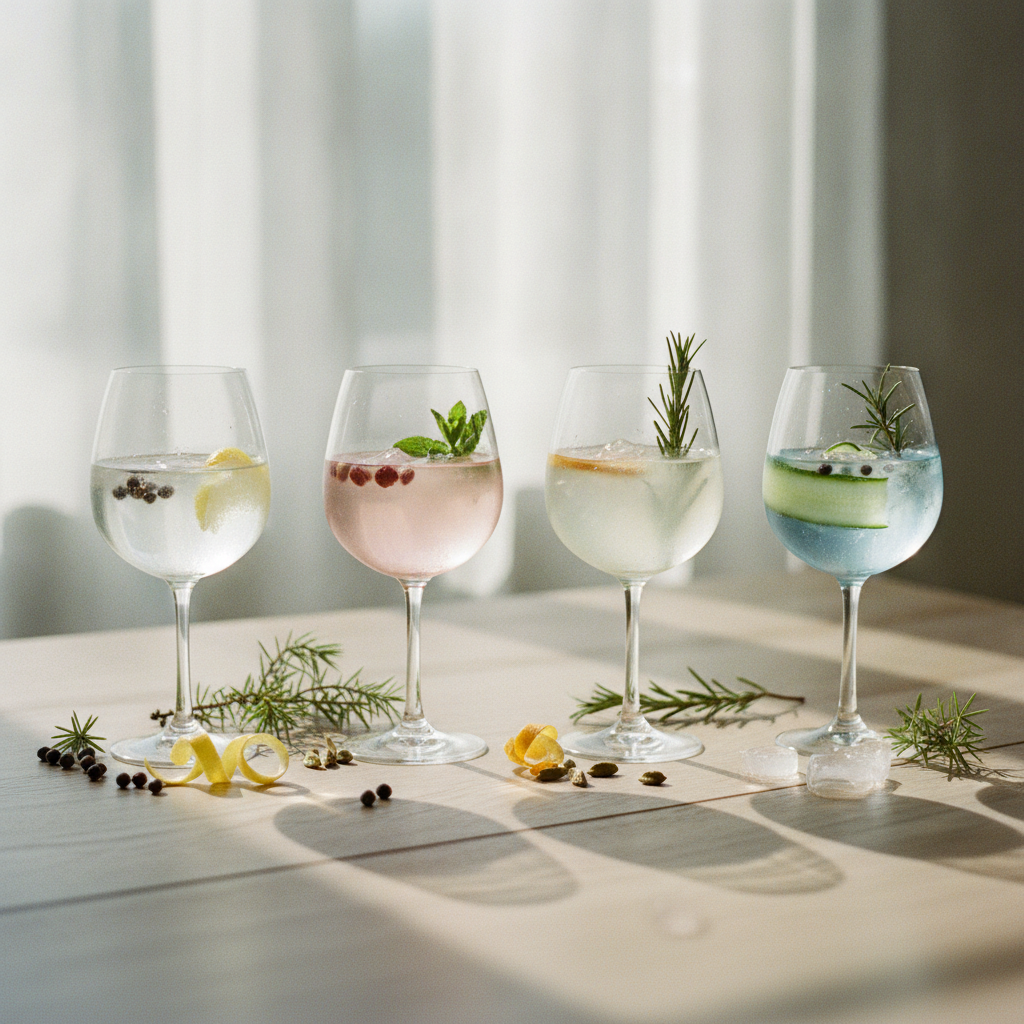
Two bottles can both say gin on the label and taste almost nothing alike. One is bone dry and piny, the other soft and sweet, a third so strong it prickles your nose. That is not marketing. It is style, and once you can name the styles, buying gin gets a lot easier.
Every gin has to lead with juniper, that clean pine-and-pepper note. Past that, the rules loosen, and centuries of distillers have pulled gin in very different directions. Here are the four styles worth knowing, what each one tastes like, and the best way to drink it. If you want the full picture of how the spirit is built in the first place, our explainer on how gin is made covers the process.
London Dry: The Benchmark
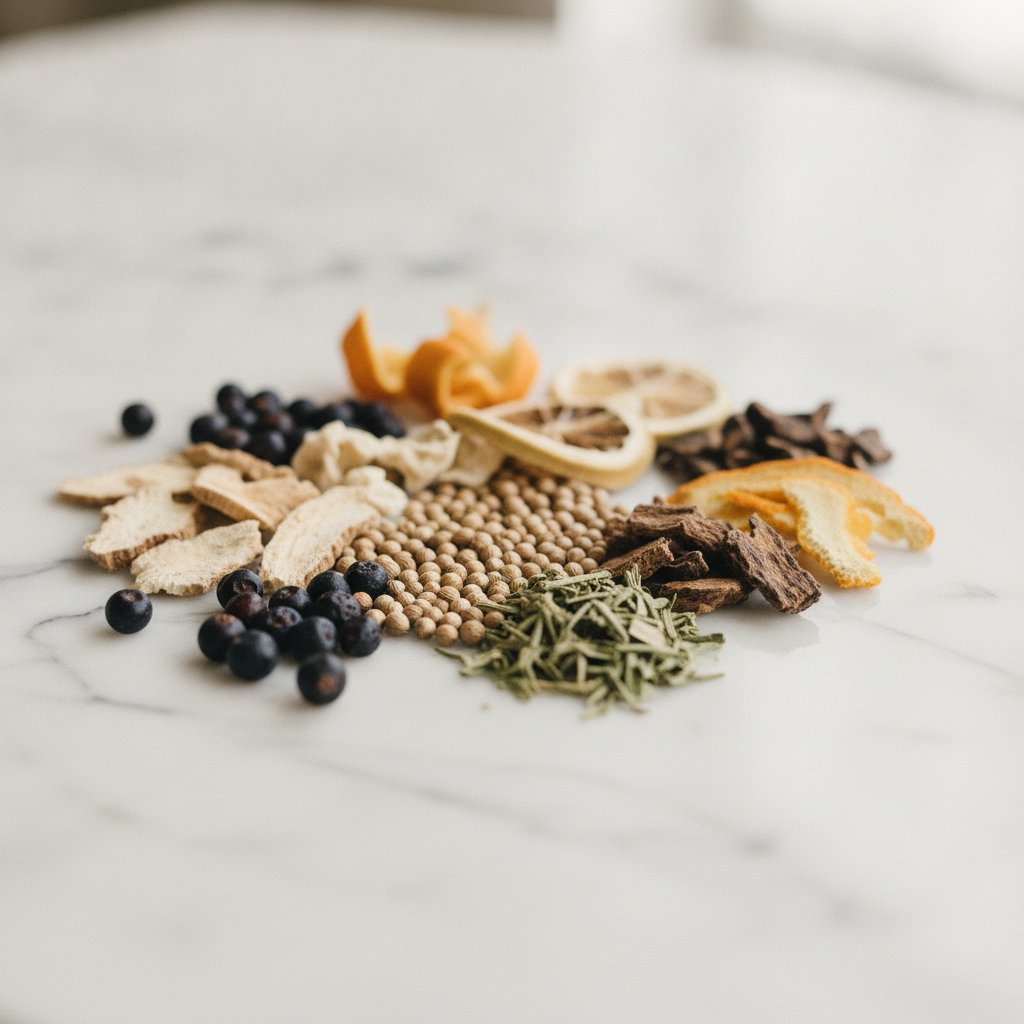
London Dry is the style most people picture when they think of gin. The name is a legal method, not a place, so it can be made anywhere. It means all the flavour comes from botanicals distilled into the spirit, with nothing added afterwards except a touch of water. No sweetening, no colouring, no flavouring poured in at the end.
The result is dry, crisp and juniper-forward, usually with citrus and a little peppery spice behind it. It is the safe, correct choice, and it holds its shape in almost any drink. Beefeater and Tanqueray are the classic reference points, and Berry Bros and Rudd's No.3 is a lovely modern take, juniper first with grapefruit and cardamom behind.
How to drink it. This is the everyday G and T gin. Give it a dry Indian tonic and a twist of lemon or pink grapefruit. It also makes the cleanest, most classic martini, and it is the right base for a Negroni where you want the gin to stand up to the vermouth and Campari.
Contemporary: Juniper Steps Back
Contemporary gin, sometimes called New Western or new wave, is the style behind most of the craft boom. Juniper is still there, because it has to be, but it is dialled back so other botanicals can lead. That might be fresh citrus, elderflower, cucumber, rose, or a coastal, herbal edge.
These are the summer crowd-pleasers, softer and more aromatic than a traditional London dry. Hendrick's, with its cucumber and rose, is the bottle that opened the door. Masons The Original Dry Yorkshire Gin, our recent bottle of the week, sits here too, bright and citrus-led and built for a long tonic.
How to drink it. Reach for a lighter or Mediterranean tonic so you do not bury the delicate botanicals, and garnish to echo the gin rather than fight it. A ribbon of cucumber, a sprig of rosemary, or a strip of orange peel does more than a wedge of lime ever will. Our summer gin and tonic guide goes deeper on matching tonic to gin.
Old Tom: The Sweeter Older Cousin
Old Tom is the missing link between the fiery gins of the eighteenth century and the dry style we know now. It is lightly sweetened, which softens the juniper and gives the gin a rounder, gentler feel. For a long time it nearly vanished, kept alive mostly by bartenders who needed it for old recipes.
It has come back because the classic cocktail revival needs it. Expect something between a London dry and a liqueur, still recognisably gin but with the edges smoothed off. The sweetness is subtle, not syrupy, and it makes Old Tom an easy one to sip.
How to drink it. This is a cocktail gin first. It is the correct choice for a Tom Collins, which was built around it, and it makes a softer, more forgiving martini. In a G and T it wants a plain, dry tonic so the gin's own sweetness is the only sweetness in the glass.
Navy Strength: Turn Everything Up
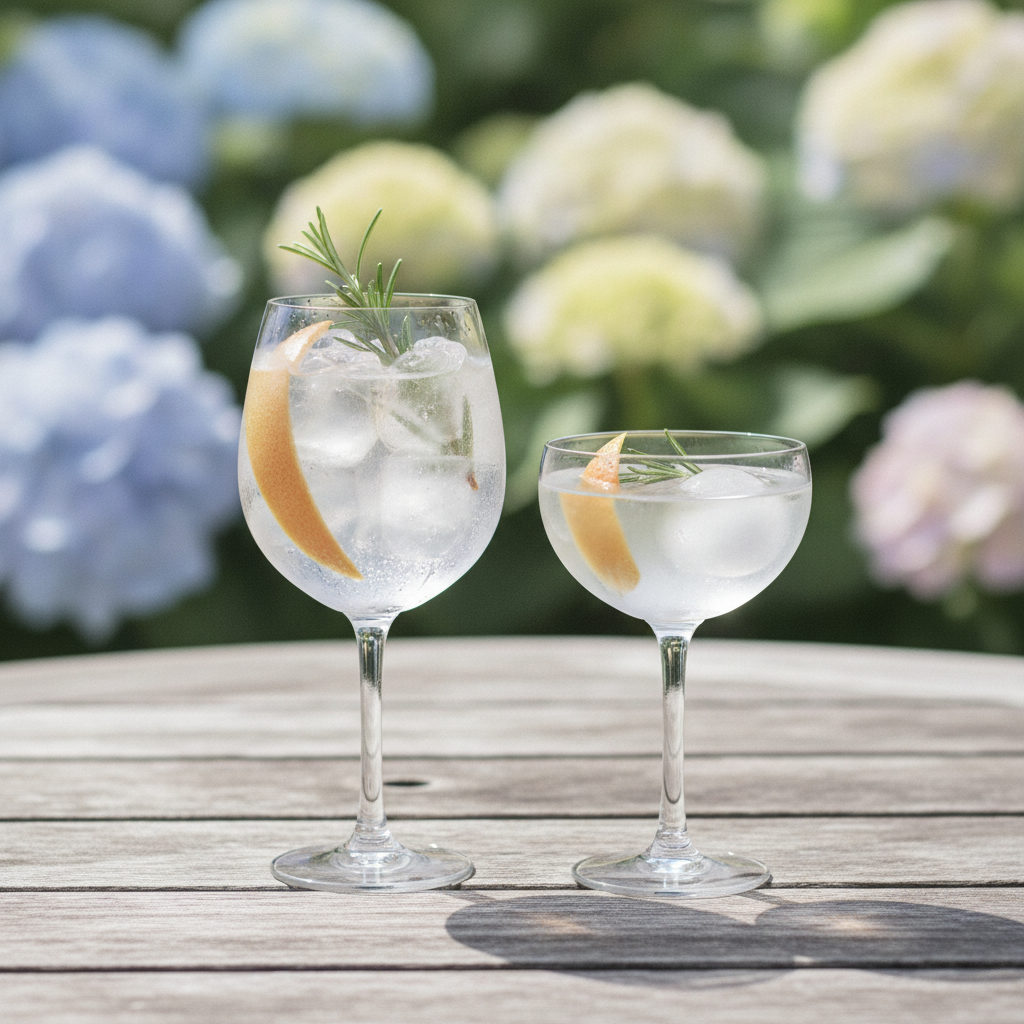
Navy strength is not a flavour so much as a volume setting. It is gin bottled at 57 percent alcohol or higher, against the usual 40 or so. The name comes from the old Royal Navy story that gunpowder soaked in high-proof spirit would still light, so the sailors knew they had not been short-changed.
The higher strength does more than add a kick. It carries the botanicals harder and louder, so a navy strength gin tastes bolder and more intense, with the juniper and spice pushed right to the front. Plymouth Navy Strength is the classic benchmark. Treat it with a little respect, because it is genuinely strong.
How to drink it. The extra power is a gift in a cocktail, because it stands up to strong flavours instead of getting lost. It makes a formidable Negroni and a fierce, aromatic martini. In a G and T you can use a touch less gin than usual and let the tonic catch up, and you still get more flavour than a standard pour would give.
Which Style Should You Buy?
If you want one bottle that does everything, a good London dry is the answer. It makes a proper G and T, a clean martini and a solid Negroni without complaint. That is why it is the benchmark.
From there, buy for the drink you actually reach for. A contemporary gin is the one for long, easy summer tonics. An Old Tom earns its place if you love classic cocktails. A navy strength is the show-off bottle for when you want the gin to lead and lead loudly. Most gin lovers end up with two or three on the shelf, one for every mood.
None of this needs memorising. Read the style off the bottle, match it to the glass you want to pour, and you will get far more out of every gin you buy.