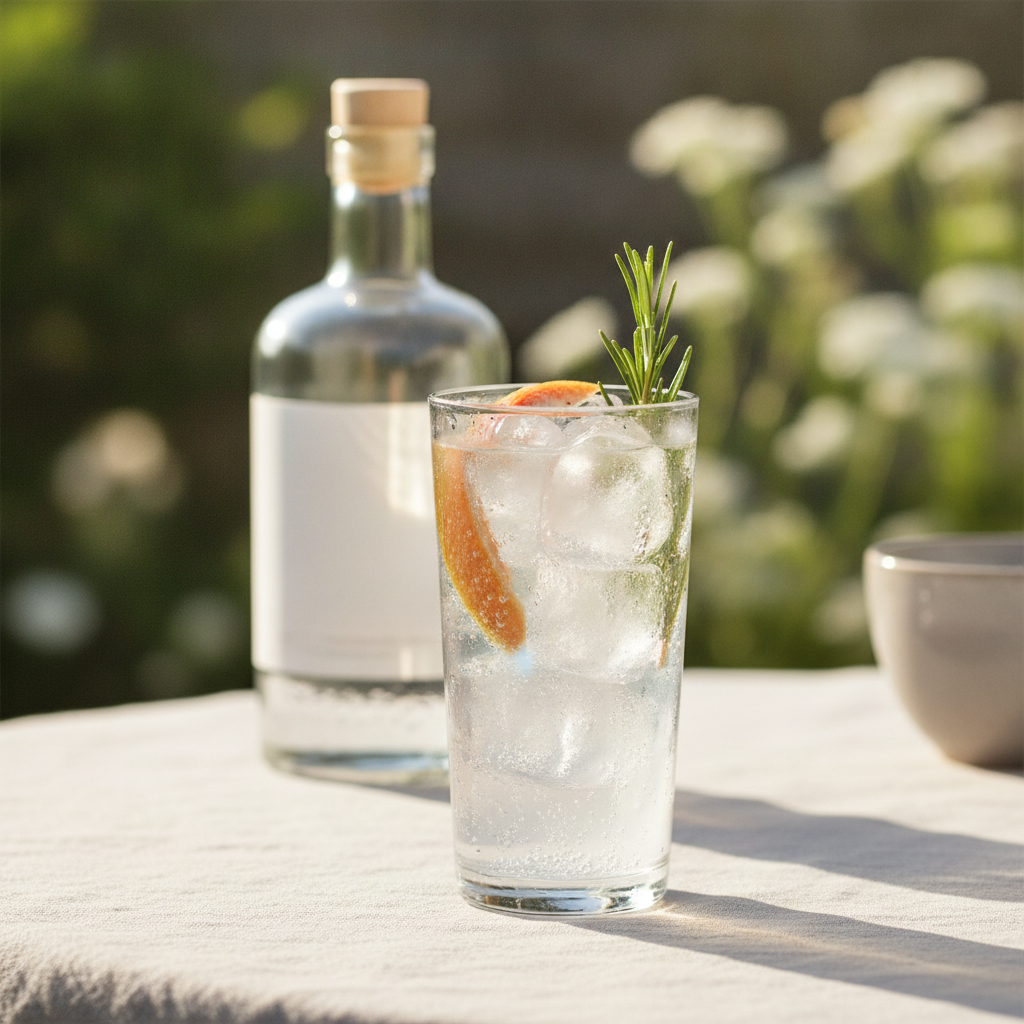
A gin and tonic is the easiest drink in the world to make and one of the easiest to make badly. Warm gin, flat tonic, one sad wedge of lime crushed into the glass, and you have wasted a good bottle. It deserves better than that, especially in July.
The good news is that fixing it costs nothing. It is all technique and a little thought about what goes with what. Here is how to build a G and T that tastes like the gin you paid for.
Start With the Glass and the Ice
Reach for the biggest glass you have. A large balloon glass or a tall highball gives the drink room and, more importantly, room for plenty of ice. This is the part most people get wrong. More ice keeps the drink colder, which means it melts slower and stays crisp instead of turning to warm water halfway down.
Fill the glass to the top with ice before anything else goes in. Big cubes are better than small ones because they melt more slowly. Give the ice a quick stir with a spoon and pour off any water that gathers at the bottom, then build the drink on top.
For the pour, aim for one part gin to three parts tonic. That is roughly 50ml of gin topped with 150ml of tonic. Tip the tonic in gently down the side of the glass so it keeps its fizz, and stir once, no more. You want the bubbles to survive.
Your Tonic Matters as Much as Your Gin
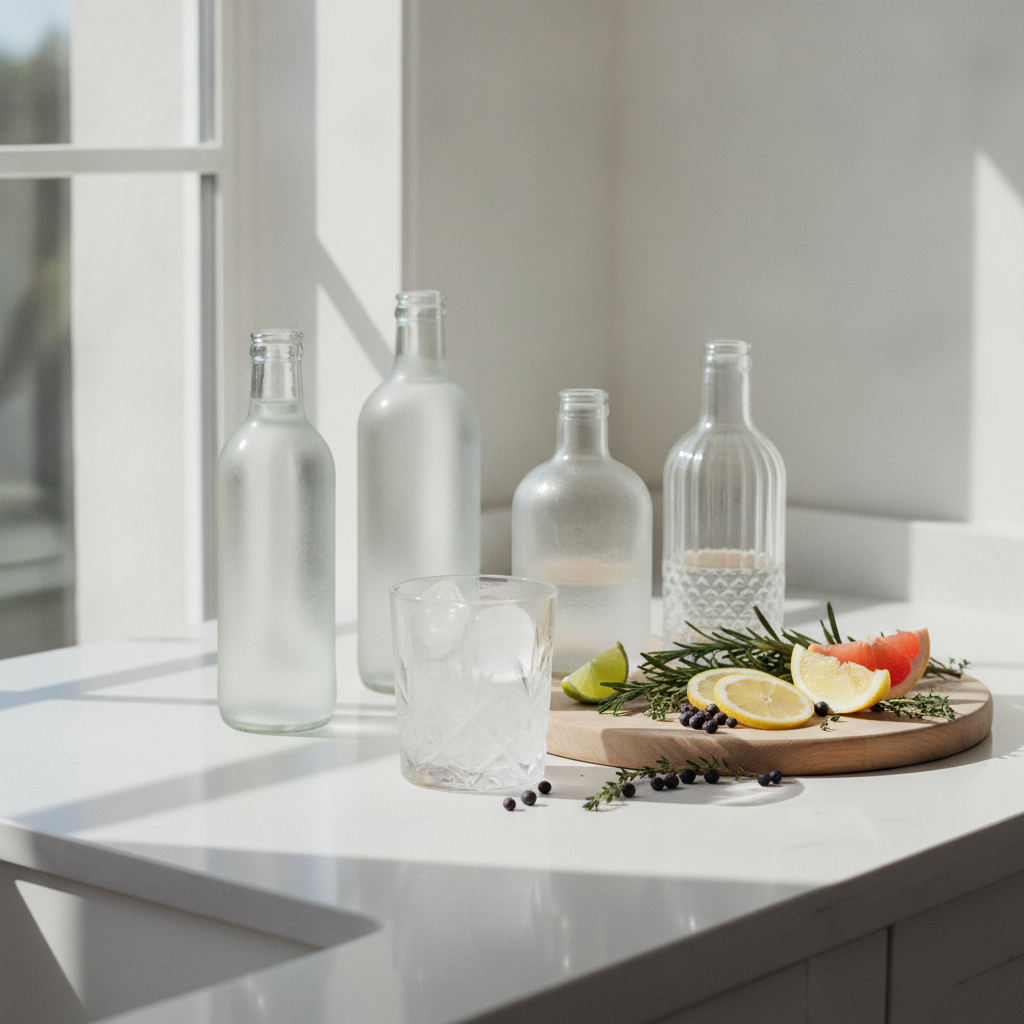
Think about it this way. The tonic is three quarters of what you are drinking, so a cheap, over-sweet one will flatten even a very good gin. Buy a tonic you actually like the taste of, and buy small bottles or cans rather than a big bottle that goes flat in the fridge door after one pour.
A classic Indian tonic is dry, quinine-forward, and a little bitter. It suits a juniper-heavy London dry and lets the gin lead. A light or low-sugar tonic is cleaner and less sweet, which is kinder on a hot afternoon and lets delicate botanicals through. A Mediterranean or floral tonic is softer and more aromatic, and it flatters gentler, citrus-led gins rather than bold ones.
The rule of thumb is simple. Match a big, bold gin with a firm, dry tonic so neither gets lost, and give a soft, floral gin a lighter tonic so you do not drown it.
Pick a Gin for the Job
There is no single best gin for a G and T, only the right style for the drink you want. It helps to know roughly what camp your bottle falls into. If you want the full picture of why gins taste so different, our explainer on what gin actually is walks through it.
A classic London dry leads with juniper, that clean pine-and-pepper note, backed by citrus and a little spice. It is the safe, correct choice and it holds up to a dry tonic and a firm garnish. No.3 London Dry Gin from Berry Bros and Rudd is a good example of the style done properly, juniper first with grapefruit and cardamom behind it. It was made with the G and T in mind and does not need much dressing up.
A contemporary or citrus-forward gin dials the juniper back and pushes fresh, zesty botanicals to the front. These are the summer crowd-pleasers. Masons The Original Dry Yorkshire Gin, our recent bottle of the week, sits here, bright and citrus-led and built for a long tonic. Give this kind of gin a lighter tonic and a fresh citrus garnish and it sings.
Then there are the characterful gins, the ones leaning on a single big flavour like sloe, rhubarb, or a coastal, herbal edge. These are worth a G and T of their own, but treat them as a change of pace rather than your everyday pour.
Garnish With Intent, Not Habit
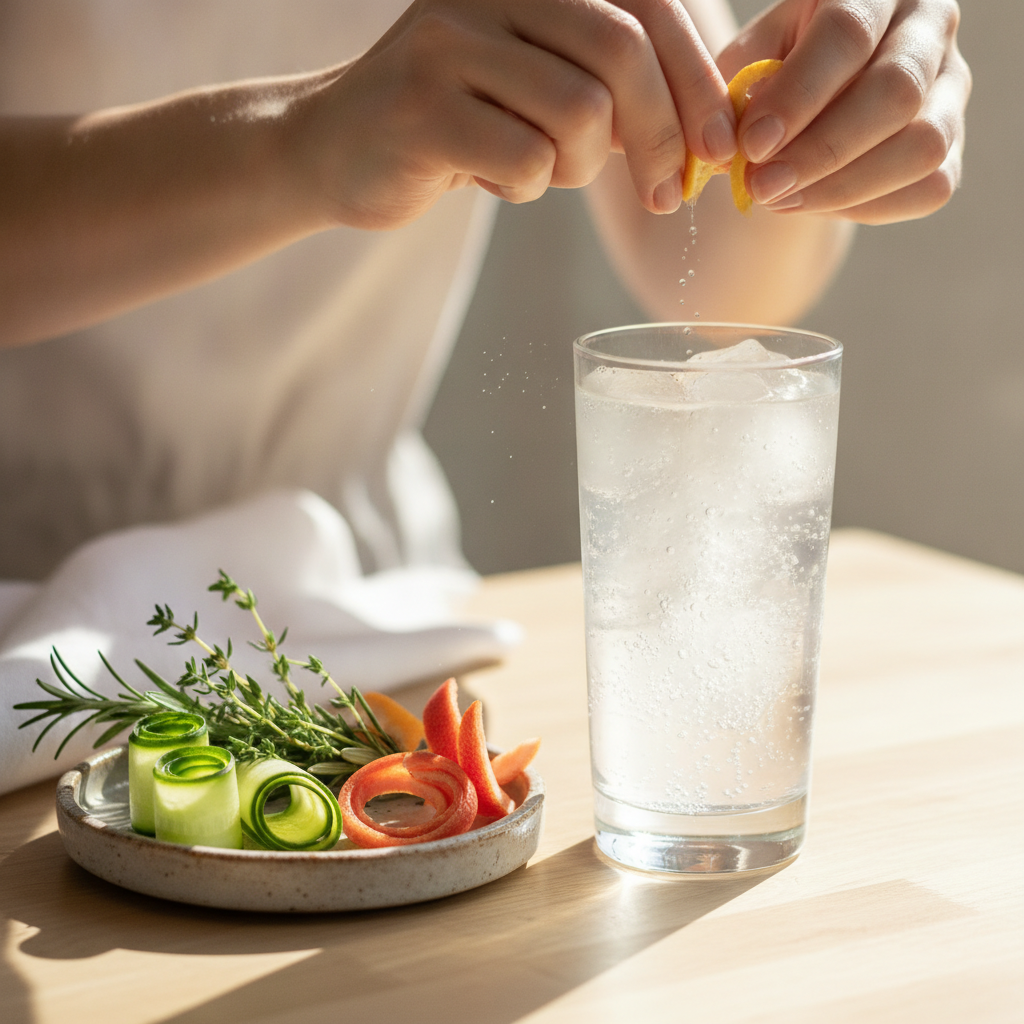
A garnish is not decoration. It is there to lift a flavour that is already in the gin. So pick one that echoes the bottle rather than reaching for lime out of habit. Lime is sharp and can bully a delicate gin, which is why it is not always the right call.
For a juniper-led London dry, a strip of lemon peel or a wedge of pink grapefruit works beautifully. For a citrus-forward gin, lean into it with grapefruit or orange peel. For anything with a floral or herbal side, a sprig of rosemary or thyme, or a couple of thin cucumber ribbons, brings out that green freshness.
Whatever you use, express the peel first. Give it a firm twist over the glass so the oils spray across the surface, then drop it in. That single move does more for the aroma than any amount of fruit piled on top. Go easy, one or two garnishes are plenty. A fruit salad in the glass just muddles everything.
Three Pairings to Try This Week
If you want to skip the theory and just make something good, start with one of these.
- •The classic. A juniper-forward London dry, a dry Indian tonic, and a twist of pink grapefruit peel. Clean, bitter, and proper.
- •The summer cooler. A citrus-forward contemporary gin, a light tonic, and a ribbon of cucumber with a sprig of mint. The one to make by the jug for a garden.
- •The aromatic. A softer, floral gin, a Mediterranean tonic, and a sprig of rosemary. Gentle, herbal, and easy to drink slowly.
None of this is fussy. Cold glass, lots of ice, a tonic you like, a gin you understand, and a garnish that has a reason to be there. Get those five things right and a gin and tonic becomes the best value drink of the summer.